Old Mirrors, New Rooms

Maya
| 23-11-2026
 · Lifestyle team
Hi, and welcome. A vintage mirror can feel like a museum piece the moment you carry it through the door.
Then you set it next to a clean-lined sofa and something clicks. The room stops looking like a showroom and starts looking like yours. That's the whole trick with mixing eras, and mirrors are one of the easiest places to start.
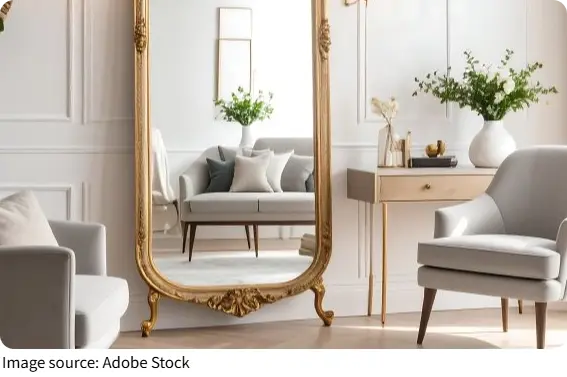
Why mirrors mix so easily
A mirror is mostly reflection, so it carries far less visual weight than a chair or a cabinet. An ornate gilt frame from the 1800s can sit above a plain white console from a flat-pack brand and the pair looks intentional, not cluttered. The frame adds texture and history, the console stays quiet, and the reflection ties the two together. You get contrast without a fight. Try a heavy carved frame over a slim metal sideboard and watch how the room settles.
Let the frame set the era
The frame is where the age lives, so treat it as the anchor. A gilded Louis Philippe mirror, common in French homes through the 1800s, brings warm gold and soft curves. A mid-century teak mirror with a simple bevel pulls the eye toward warmer wood tones. Modern furniture tends to be flat and matte, so the frame gives you the one surface with real patina. Match the frame's metal or wood to something small nearby, a lamp base or a door handle, and the mix reads as deliberate.

Scale beats style every time
You can blend any two eras if the sizes agree. A small oval mirror floating on a huge blank wall looks lost, no matter how good the frame is. A tall leaner mirror, roughly 70 inches high, works behind a low modern bench because the heights balance. Measure the wall first, then shop. The rule people skip: the mirror should fill about two-thirds of the space above whatever sits beneath it.
Where to place it for real impact
Skip the hallway spot above the shoe rack. Lean a large vintage mirror against the wall in a dining room and it doubles the light from a pendant. Hang one opposite a window and the whole room brightens without a single new fixture. In a small apartment, a floor mirror near the entry makes the space feel wider the second you walk in. Position matters more than pedigree.
Handling the wear and the glass
Desilvering, the cloudy spotting on old glass, is part of the appeal for many people. It scatters light and softens reflections. If the spotting bothers you, leave the frame and have the glass replaced by a local glazier, usually a modest cost compared with buying new. Check the back before you hang anything heavy. Old wire and rusty D-rings fail, so swap in new hardware rated for the weight.
Building a mix that holds together
Pick one modern piece as your base and one vintage mirror as the accent, then repeat the mirror's material once more in the room. A brass-framed mirror plus a brass floor lamp plus an otherwise neutral modern sofa reads as a plan. Add a third era and it tips into chaos. Two is the number that works.
The best mixed rooms don't look decorated, they look collected. Start with the mirror you already love, set it against your plainest piece of furniture, and see how the contrast lands. You'll know within a minute whether it works, and that quick gut check is more reliable than any style guide.