Lavender Bedroom Ideas

Hana
| 13-11-2026
 · Lifestyle team
Lavender offers more variety than its delicate appearance might suggest. Depending on the shade and how it is used, it can make a bedroom feel airy and fresh, richly layered, or warm and intimate. Its range includes pale lilac, pinkish purple, smoky gray-purple, and deeper violet tones, giving homeowners plenty of room to experiment.
Interior designers are also using lavender beyond traditionally feminine spaces, pairing it with stronger colors, natural materials, and contemporary furniture. The following ideas show how to introduce the color without making the bedroom feel overly sweet or dated.
1. Contrast Lavender Walls With a White Ceiling
A lavender wall color becomes more noticeable when set against a crisp white ceiling. This combination creates a clear visual boundary while keeping the room from feeling too enclosed. White wainscoting or painted woodwork can provide a similar effect, particularly in bedrooms with traditional architectural details.
2. Introduce Lavender Through Artwork
Painting an entire bedroom is a significant commitment, so artwork and accessories offer a more flexible starting point. A lavender print above the bed can establish the color scheme, while a purple bedspread reinforces the connection without requiring permanent changes to the walls.
White walls and wooden furniture help balance the purple elements. This approach is particularly useful in rooms where you want a fresh, colorful atmosphere but prefer to keep the larger surfaces relatively neutral.
3. Combine Lavender With Blue and Other Purple Tones
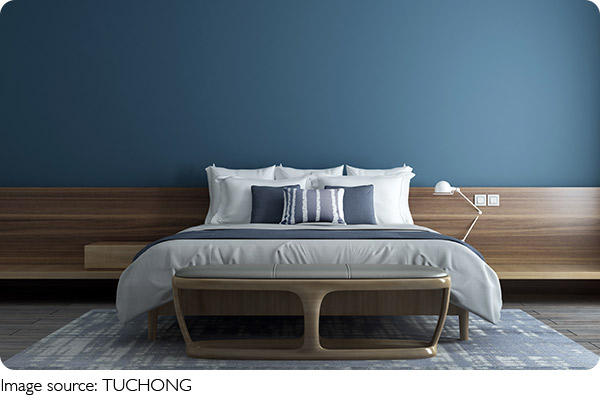
Lavender does not have to work alone. Layering it with related purple shades creates a coordinated look, while blue introduces a cooler contrast. This combination can be especially effective when two people have different color preferences.
For example, lavender walls can provide the softer foundation, while blue appears in cushions, bedding, or an upholstered headboard. Black and dark gray can also be introduced through furniture or accessories to give the palette more definition.
4. Give a Children's Bedroom a More Personal Look
Lavender can bring personality to a child's bedroom without relying on the usual pink or blue color schemes. A light purple wall creates a gentle background, while rust-colored curtains add warmth and prevent the room from looking overly delicate.
Floral bedding, linen fabrics, and a vintage-style painting can introduce pattern and character. A rattan daybed is another useful addition, bringing natural texture and a relaxed appearance.
5. Use Two Shades of Lavender Together
Color blocking with two variations of the same color creates depth without introducing an entirely different palette. Try combining a pale lavender with a stronger purple on separate walls or architectural sections. The difference in intensity gives the bedroom more dimension and makes the color scheme feel deliberate.
Metallic details can strengthen the effect. Dark bronze accessories, for instance, create a rich contrast against purple surfaces. Consider using this finish on lamps, furniture hardware, or decorative pieces rather than adding too many metallic elements throughout the room.
6. Color-Drench Built-In Furniture
Built-in beds and storage units are practical solutions for bedrooms with limited space, but large fitted structures can sometimes look plain. Painting the built-in furniture in the same lavender shade as the surrounding walls helps it become part of the overall design. This technique, known as color drenching, creates a more unified appearance by reducing the visual separation between the furniture and the room.
7. Choose a Pale Lilac for a Soft Finish
Lilac sits close to lavender but often has a lighter, pinker appearance. It is a good option for anyone who wants more character than plain white or cream but does not want an intense purple room. Painting the walls in pale lilac can create an intimate atmosphere, especially when paired with white architectural details. The combination works well in bedrooms with distinctive wall shapes, paneling, or decorative trim because the color highlights those features without overwhelming them.

8. Bring Lavender Into the Bedding
Lavender bedding is an easy way to introduce color while keeping the walls neutral. Sheets, pillowcases, quilts, and comforters in soft purple shades create a coordinated look without requiring a major decorating project. The color also works in both bright and darker bedrooms. For a balanced arrangement, combine lavender bedding with white sheets, neutral furniture, and a few darker accents.
Lavender can be used in a bedroom in many different ways, from a small artwork detail to a fully color-drenched interior. Pale lilac and gray-based shades suit lighter, understated schemes, while deeper purple creates a more dramatic atmosphere. Combining the color with white, blue, wood, rust, or bronze can further change its character.