Astrology vs. Science?

Rafael
| 15-10-2026
 · News team
Astrology has been part of human culture for thousands of years, with deep roots in ancient civilizations like the Babylonians and Egyptians.
It suggests that the positions of celestial bodies at the time of a person's birth influence personality traits, behavior, and even future events.
Despite its long history, many question whether astrology has any scientific foundation, or whether it is simply a product of belief and coincidence.
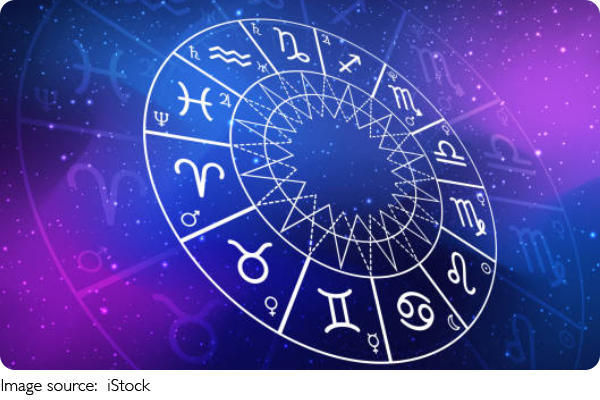
Astrology: The Basics
Astrology is divided into several systems, the most common being Western astrology, which is based on the twelve zodiac signs. Each sign is linked to a specific period of the year, and the position of the sun at birth is said to shape a person's personality.
According to astrologers, planets, the moon, and other celestial bodies also play a role. Their alignment at the exact moment of birth is said to affect emotions, career, relationships, and health. Astrologers interpret these positions through detailed horoscopes, making predictions or giving advice based on the planetary placements.
The Scientific Perspective: Lack of Evidence
Viewed through a scientific lens, astrology faces skepticism because no empirical data supports its claims. Although it has been practiced for millennia, studies have failed to provide convincing evidence that zodiac signs or the positions of celestial bodies at birth have any measurable influence on human behavior or fate.
A well-known example is the Mars effect, studied by French psychologist Michel Gauquelin. Gauquelin proposed that people born when Mars was in certain positions might be more likely to pursue careers in sports.
However, despite multiple attempts to replicate the results, no consistent, statistically significant link was found. This failure to confirm such claims in controlled studies is a key reason the scientific community views astrology as a pseudoscience.
Researchers have also tested astrology's core claim, the link between personality traits and zodiac signs, and found no reliable connection. For example, a study published in Nature in 1985 found that astrologers could not match birth charts with people's personality profiles any better than chance.
Psychological Factors: Why Astrology Feels Accurate
Despite this lack of scientific validation, astrology remains popular. A major reason is the Barnum effect, also called the Forer effect, in which people accept vague, general statements about themselves as highly accurate.
This explains why astrological personality descriptions often feel so personal. A horoscope might say you will face a difficult decision today, which applies to almost anyone, yet the reader feels it was written just for them.
Astrology also offers a sense of comfort, control, and predictability in an uncertain world. Whether facing a tough day or a relationship challenge, people use it as a structured way to think through their emotions.
Astrology vs. Astronomy: Two Different Disciplines
Astrology is often confused with astronomy, the science of celestial bodies. Astrology claims that the positions of stars and planets have a direct impact on human life, while astronomy studies their physical properties using proven laws of physics and mathematics.
Astronomy explains everything from the structure of galaxies to the behavior of stars and planets, with precision and evidence. Astrology lacks this foundation and does not meet the standards of evidence and reproducibility that science requires.
The Popularity of Astrology: Cultural and Social Influence
Astrology continues to thrive today, particularly through social media and apps that deliver personalized daily horoscopes. Many people use it for self-reflection, personal guidance, or simply entertainment. Its appeal is linked to the human search for patterns and meaning, especially in uncertain times.
It also builds a sense of community, as people often bond over shared zodiac signs and horoscopes. This cultural role, rather than any scientific validity, explains much of its persistence over the centuries.

Astrology has no scientific proof behind it, but it still holds a special place in many people's lives. For Lykkers who enjoy it, the practical approach is to treat horoscopes as a tool for reflection and entertainment, not as a basis for important decisions about health, money, or relationships.