A Calm Bedroom Retreat

Hiro
| 28-09-2026
 · Lifestyle team
The bedroom should feel like a natural pause at the end of a busy day. A calm design does not require expensive furniture or a complete renovation.
Small choices such as a softer colour palette, comfortable bedding, gentle lighting, and less visual clutter can make the room feel more settled and inviting.
The goal is to create a space that feels comfortable without becoming plain or lifeless.
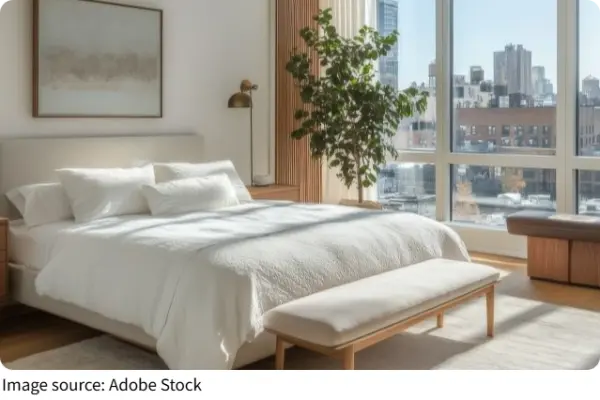
Choose a Soft Colour Palette
Colour can shape the overall atmosphere of a bedroom, so start with shades that feel easy on the eyes. Soft blue, muted green, beige, taupe, warm cream, and gentle grey can create a quieter visual setting than highly intense colours.
A useful approach is to choose one main shade and build the room around slightly lighter or darker versions of it. For example, warm beige walls can work with cream bedding, natural timber furniture, and muted green accessories. Keeping the palette connected helps the room feel cohesive rather than visually busy.
Keep Furniture Simple and Useful
A peaceful bedroom does not need to be filled with furniture. Too many cabinets, chairs, decorative objects, and storage pieces can make the room feel crowded. Instead, focus on the items that genuinely serve a purpose.
A comfortable bed should remain the main feature. Pair it with a practical bedside table and enough storage to keep everyday belongings organised. Furniture with clean lines and soft finishes can help maintain an uncluttered appearance while still making the room feel warm and lived-in.
Make Bedding the Comfort Zone
The bed naturally becomes the centre of attention, so bedding deserves careful consideration. Choose fabrics that feel pleasant against the skin and layer them without creating unnecessary bulk.
A simple combination of sheets, a duvet or blanket, and a few cushions can provide plenty of texture. Neutral or muted colours help maintain the relaxed appearance. During cooler months, an additional throw can add warmth while giving the bed a more inviting finish. The key is balance.
Use Lighting That Feels Gentle
Bright overhead lighting can make a bedroom feel more functional than relaxing. Instead, use several light sources so the atmosphere can change throughout the evening.
Bedside lamps are useful for reading, while dimmable fixtures allow the brightness to be adjusted when the room needs a softer mood. Warm-toned lighting can also make neutral materials and fabrics appear more inviting. Using smaller sources around the room rather than relying on one strong ceiling light creates greater flexibility.
Add Texture With a Rug
A rug can make a noticeable difference without changing the entire room. Beyond adding visual warmth, a soft rug provides a more comfortable surface underfoot and can help reduce sound. Consider a rug large enough to extend around the bed rather than choosing one that looks disconnected from the furniture.
Neutral shades, subtle patterns, and soft textures tend to work particularly well in a calm bedroom. Placement also matters. A rug beside the bed can create a comfortable landing area, while a larger design can help visually anchor the entire sleeping zone.
Bring Nature Into the Room
A small amount of greenery can introduce freshness without overwhelming the design. A potted plant on a shelf, a simple vase with greenery, or a few plants near a window can add colour and texture. The important part is moderation. One or two carefully positioned plants can have more impact than filling every available surface. Choose varieties that suit the room's light conditions and the amount of care available.
Reduce Visual Clutter
A calm bedroom is easier to maintain when everything has a place. Keep frequently used items within reach while storing less-used belongings out of sight. Clear bedside tables, organised drawers, and simple surfaces can make the room feel more orderly.
Personal touches still matter. A framed photograph, a favourite piece of artwork, or a meaningful decorative object can give the bedroom character without making it feel crowded.

Creating a calm bedroom is less about following a strict decorating formula and more about choosing elements that make the space feel comfortable and manageable. Start with one area that feels too busy, make a small change, and gradually shape the room into a place that feels naturally peaceful at the end of each day.