Palouse Prairie in Layers

Samir
| 02-09-2026
 · Travel team
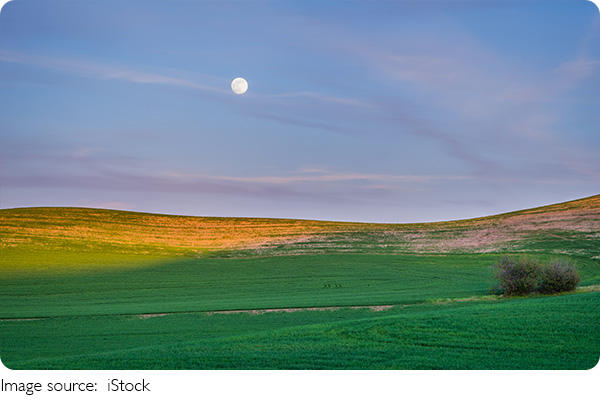
For Lykkers seeking the layered green and yellow landscape, the Palouse around Steptoe Butte in southeastern Washington is a particularly strong match. This is not a flat grassland. The region is defined by rolling agricultural hills whose crops create broad bands of green, gold, and shadow.
Steptoe Butte rises to 3,612 feet and provides a panoramic viewpoint over this unusual terrain. Base yourself in Pullman for two nights, rent a car, and devote one full day to the countryside. The trip works best when you stop chasing individual landmarks and start planning around color, elevation, and light.
Steptoe Butte
See the Palouse Properly
The Palouse changes dramatically through the growing season, so timing matters more than squeezing another attraction into the itinerary.
Choose May or June for green
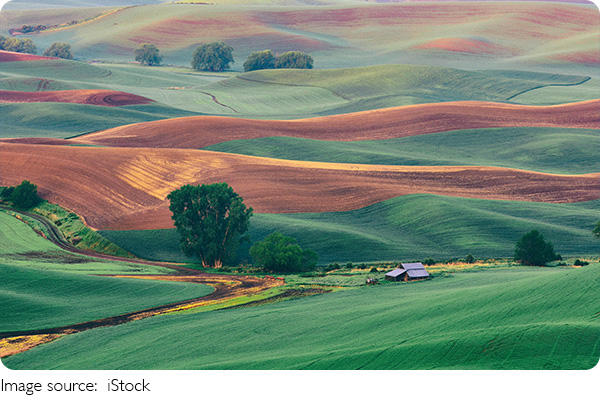
Late spring into early summer is the strongest period for intensely green hills, while the landscape gradually shifts toward yellow and gold as crops mature later in summer. Because individual fields are planted and harvested on different schedules, the countryside often contains several colors at once rather than changing uniformly.
That variation is exactly what creates the layered effect visible in the image. Tractor lines add fine patterns, while adjacent hills catch light at different angles. You therefore do not need wildflowers or dramatic mountains to make the landscape interesting.
Plan roughly five to six hours for a countryside drive rather than treating Steptoe Butte as a single out-and-back stop. From Pullman, drive north through the agricultural landscape toward Colfax and continue toward the butte. The distance is manageable, but photography makes the journey much slower than the map suggests.
Keep stops to established roadside pullouts and public areas. The beautiful fields are working farmland, and the most tempting hill for a photograph may be private property. A telephoto lens or strong optical zoom is especially useful here because it compresses several distant ridges into the wave-like layers that characterize classic Palouse views.
Morning provides soft light, but late afternoon is more practical for a first visit. Shadows begin stretching across the folds of the terrain, separating hills that appear almost flat around midday.
Save Steptoe Butte for late afternoon
Steptoe Butte State Park Heritage Site is the key viewpoint. The park covers 168 acres, and the summit rises above the surrounding farmland with views extending across the Palouse toward distant mountain ranges. It is open from 08:00 until dusk.
A one-day Discover Pass costs US$10 for vehicle access. Allow around two hours at the park rather than arriving only minutes before sunset.
Reach the summit about 90 minutes before sunset. First observe where the light is falling rather than immediately choosing one viewpoint. The Palouse works differently from a conventional mountain panorama: the strongest composition may be a small group of illuminated hills several kilometres away.
As the sun drops, look away from it as well. Side-light creates the strongest three-dimensional contours, while alternating illuminated and shaded fields produce the green-and-gold bands.
The park is day-use only, so plan to leave by dusk rather than expecting to remain for a long night photography session.
Make the Most of Your Visit
Steptoe Butte may be the visual, but staying in Pullman prevents the entire visit from becoming one long drive. Two nights provide enough flexibility for changing clouds and light.
Base yourself in Pullman
Pullman makes a practical southern base because it offers far more accommodation and dining choices than the smaller farming communities farther north. Rooms commonly start around US$100–150 per night, although rates vary substantially with local events and booking dates.
A car is important. This landscape rewards spontaneous stops, and the best light may appear between named viewpoints rather than at a formal attraction.
On your first afternoon, drive the rural roads immediately outside Pullman for an introduction to the terrain. On day two, leave after breakfast and make the longer loop toward Steptoe Butte, keeping the summit for late afternoon. This avoids spending both days photographing essentially the same composition.
For two people sharing accommodation, a two-night trip can reasonably require around US$250–400 per person for lodging, meals, fuel, and basic sightseeing expenses, excluding the rental vehicle and travel to Washington. Treat that as a planning range rather than a fixed package cost.
Let weather change the plan
Perfect blue skies are not necessarily ideal here. Broken cloud can create moving patches of sunlight and shade across the hills, making the terrain appear deeper and more sculptural.
Wind also matters. Steptoe Butte is exposed, so bring a light outer layer even when Pullman feels comfortable. If you photograph with a tripod, keep it stable and avoid blocking narrow viewing areas.
If the summit is completely overcast when you arrive, do not assume the day is lost. Spend more time exploring lower roads, where closer hills need less dramatic light to reveal their patterns. The following morning gives you a second opportunity before leaving Pullman.
Avoid winter if the green landscape is your goal. Washington State Parks notes that the road at Steptoe Butte is not maintained during winter, adding another reason to favor the growing season.
For Lykkers, the Palouse is most rewarding when you treat farmland as the destination rather than scenery between attractions. Give yourself two nights in Pullman, reserve several hours for rural roads, and reach Steptoe Butte well before sunset.
In the right light, ordinary crop fields become enormous green waves, yellow bands, dark shadows, and delicate parallel lines stretching across the hills. That combination makes this one of the most distinctive prairie-style landscapes in the American Northwest.