Erg Chebbi Desert Escape

Camille Dubois
| 02-09-2026
 · Travel team
If you’ve ever imagined visiting the Sahara, Erg Chebbi is the kind of place that makes that dream feel real. Near the village of Merzouga in southeastern Morocco, the desert opens into wide orange dunes where you can watch the sunset, ride a camel to a desert camp, and wake up to the first light over the sand.
Getting there takes some planning, especially if you’re coming from Marrakech, but once you reach Merzouga, the experience is refreshingly simple. Spend the afternoon exploring the area, head into the dunes before sunset, enjoy a night at camp, and wake up early for sunrise. The key is giving yourself enough time to enjoy the journey instead of rushing through it.
Erg Chebbi
Make One Desert Night Count
A Sahara visit works best when you organize the day around temperature and light. Midday reveals the scale of the dunes, but sunrise and sunset create the deep orange color, rippled textures, and long shadows that make Erg Chebbi visually distinctive.
Reach Merzouga before mid-afternoon
Do not treat Merzouga as a quick excursion from Marrakech. The road journey is roughly 560 km and normally requires about nine hours without substantial sightseeing stops. A three-day road itinerary is therefore far more sensible if Marrakech is your starting point.
Once in Merzouga, allow at least two nights in the area: one at a guesthouse or hotel and one in the dunes. This protects the desert experience from a delayed road arrival and gives you time to rest before heading onto the sand.
October through April is the most comfortable period for outdoor desert activities. Summer temperatures can make extended daytime exploration unpleasant, while cooler months allow more time outside. Even then, expect a noticeable temperature difference between warm afternoons and much cooler nights.
Carry at least 1.5 litres of water for an afternoon and evening excursion, plus sunscreen, sunglasses, a lightweight long-sleeved layer, and something warmer after sunset. Closed shoes are useful around camp, although soft sand often makes walking easier in lighter footwear.
Time the camel trek for sunset
A typical camel trek from the edge of Erg Chebbi toward a desert camp takes around one to 1.5 hours. That is enough time to move beyond the roadside edge and experience larger uninterrupted dunes without spending several uncomfortable hours riding.
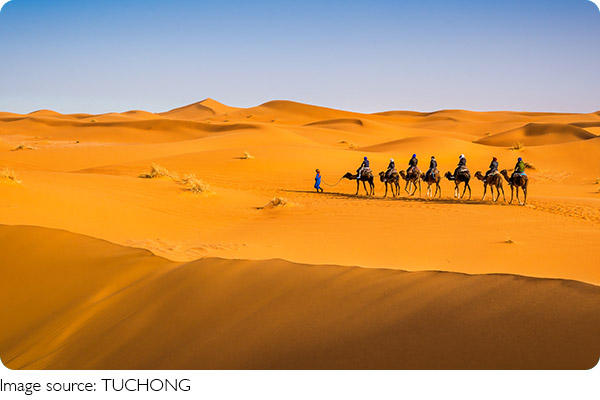
For scenery resembling the image, depart about 90 minutes before sunset. The lower sun produces long caravan shadows across the rippled sand and gradually changes the dunes from pale gold to deeper orange.
Short sunrise or sunset camel excursions commonly cost around EUR 20 per person, while an overnight camel-and-camp package with dinner and breakfast can cost roughly EUR 105 at established desert properties. More comfortable camp options may rise toward EUR 150 per person. Always confirm whether the quoted rate includes the ride, camp accommodation, dinner, breakfast, and return transfer.
If camel riding does not appeal to you, many camps also arrange 4×4 transfers. The dunes remain the destination; the animal ride is optional rather than essential.
Stay Long Enough to Slow Down
The strongest Erg Chebbi experience is not a collection of desert activities. One sunset, one quiet evening, and one sunrise provide more value than filling every hour with another excursion.
Choose the camp by location
Camp prices vary considerably with facilities. Simple desert stays can begin around EUR 30–65 per person, while upgraded camps with private bathrooms and more elaborate facilities often cost considerably more.
Do not compare camps only by tent photographs. Ask how far the camp sits from Merzouga, how guests reach it, whether meals are included, and how many tents share the site. A smaller camp farther into the dune environment may provide a stronger sense of place than a more elaborate property close to the road.
After arriving, leave at least 30 minutes before dinner simply to walk around the nearby dunes. Stay within sight of camp unless accompanied by someone familiar with the area. After dark, distances and dune shapes become much harder to judge.
Wake about 40 minutes before sunrise the following morning. You do not need to climb the highest dune. A nearby ridge usually provides enough elevation for the changing light without turning the morning into a strenuous ascent.
Budget for the journey, not just the camp
The desert night itself is only part of the cost. If Merzouga is incorporated into a multi-day journey from Marrakech, shared three-day tours commonly fall around EUR 100–180 per person, while private transport and upgraded accommodation increase the total substantially.
For travelers arranging the journey independently, around EUR 120–200 per person is a practical planning range for two nights around Merzouga, including modest accommodation, one overnight desert experience, meals, and local activities, but excluding the long-distance journey to the region.
Avoid choosing a two-day Marrakech return simply because it appears efficient. Too much of those two days disappears into road travel. Three or four days allow stops through the Atlas and southeastern Morocco while keeping the actual Sahara experience unhurried.
Also resist booking every available dune activity. Quad excursions, sandboarding, 4×4 trips, and camel treks are widely offered, but combining all of them can make the landscape feel like an activity venue rather than the reason you traveled so far.
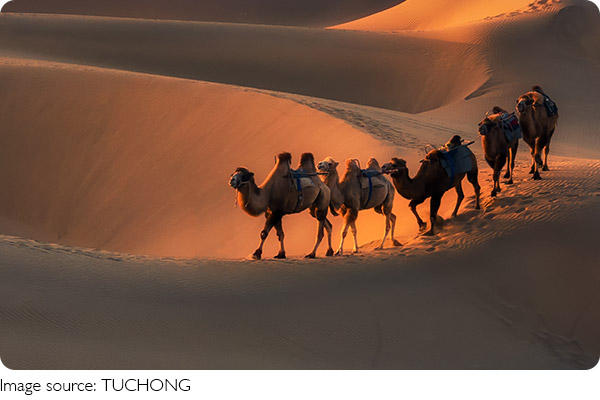
For Lykkers, Erg Chebbi works best with a simpler plan: reach Merzouga without rushing, enter the dunes about 90 minutes before sunset, stay one night among the sand, and wake early enough to watch the colors change again. That schedule captures exactly what makes the image compelling: enormous sculpted dunes, a slow caravan, scattered desert vegetation, and shadows stretching across the Sahara.