Olympos Beach Escape

Darius
| 03-09-2026
 · Travel team
Welcome, everyone. Most people picture Turkey's coast as all-inclusive resorts with swim-up bars and perfectly raked sand.
Olympos Beach is the opposite of that, and that's exactly why it sticks with you. This is a pebbly cove at the base of a mountain, backed by a forest, with Lycian ruins poking through the brush right behind the shore.
You don't come here for luxury. You come for the setting, the history, and the feeling that you've found a spot that hasn't been smoothed over for tourists.
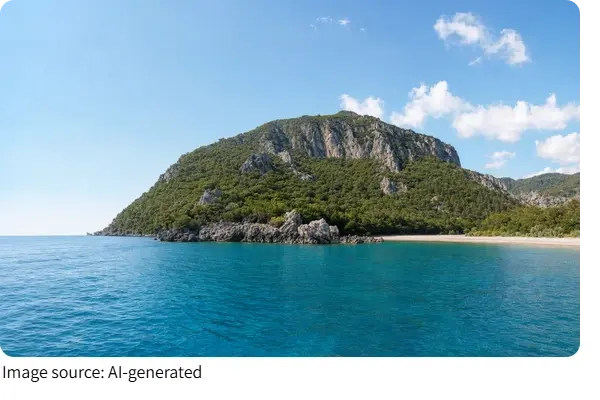
Why this cove feels different
The beach itself is about 3 kilometers of dark sand and small stones, not the powder-soft stuff you get farther west. The water is clear and cold, fed by mountain streams, and the waves can be a bit rough. That's fine, because you're not here to lounge on a sunbed.
You're here to swim, then walk two minutes inland and wander through the ruined city of ancient Olympos, where crumbling stone walls and a Roman theater sit tangled in fig trees and ivy. The contrast is what does it. One minute you're floating in the Mediterranean, the next you're stepping over a 2,000-year-old doorway.
Flames and forests up the mountain
A few kilometers up the slope, the Chimera flames burn out of the ground. These are natural gas vents that ignite as they seep from the rock, and they've been burning for thousands of years. The hike takes about 40 minutes from the trailhead, a steady climb through pine forest that gets steeper near the top.
Go at dusk. You'll see the flames flickering across the hillside as the light fades, and the whole scene feels older than anything you've seen all day. Bring a headlamp for the walk back down, because the path is rocky and the darkness comes fast.
Olimpos Beach
Where to stay and what to pay
The village of Olympos is a tangle of treehouse hostels, wooden cabins on stilts, and open-air restaurants with hammocks. A basic treehouse bed runs around 15 USD a night, and that usually includes breakfast. Bungalows with a private bathroom go for about 40 USD.
The vibe is young and social, so if you want quiet, book a place further from the main lane. The beach is a 10-minute walk from most lodgings, and the forest path there is part of the charm. You'll pass goats, grazing horses, and the occasional tortoise crossing your path.
Getting there and timing it right
The nearest airport is Antalya, about 90 minutes north by car. You can take a shuttle from the airport or rent a car, and the drive hugs the coast with views of cliffs and turquoise water. There's no direct train, so road is the only real option. Aim to visit between May and October, when the sea is swimmable and the treehouses are open.
July and August are packed, so late September is the sweet spot. The water is still warm, the crowds thin out, and the forest smells like pine and dry earth. One practical note: there are no ATMs in the village, so pull cash out in Antalya or the nearby town of Kumluca before you arrive.
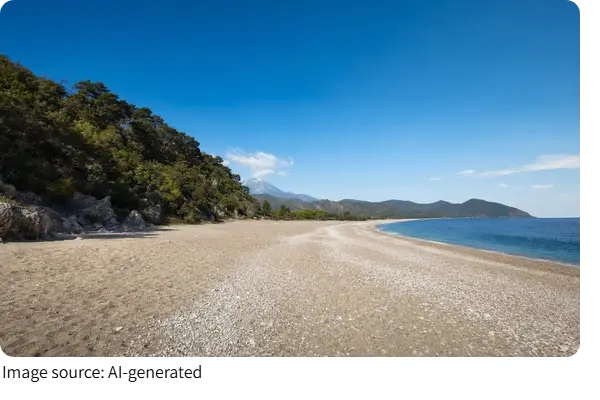
The place works because it doesn't try to be anything other than what it is. You sleep in a wooden cabin, eat simple food, swim in cold water, and climb a mountain to watch fire rise from stone. Pack light, bring cash, and give yourself at least two nights. That's enough time to hit the beach, do the Chimera hike, and still have an afternoon to just lie on the pebbles and listen to the waves. Go before it gets too polished. It might not stay this raw forever.