Saarbrücken Bridge Guide

Anika
| 03-09-2026
 · Travel team
Hi there. Most people crossing the Saar River in Saarbrücken barely pause on the bridge.
They're heading to the old town or the train station, and the bridge is just a way to get from one side to the other. But the Saarbrücken Bridge, the main pedestrian span near the city center, is worth a stop in its own right.
You get a straight view down the river toward the green hills on both sides, and the water below moves faster than you'd expect. It's not a grand landmark like the Golden Gate, and it doesn't try to be. It's a working bridge with a good feeling to it, and the city opens up around you once you slow down.
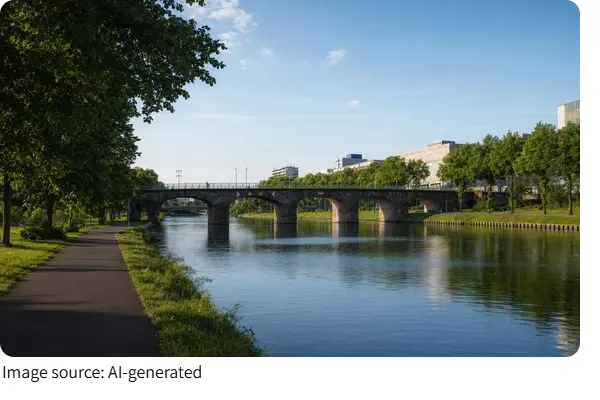
Why the bridge deserves a stop
The bridge connects the historic district on the left bank with the newer commercial side, and the contrast is the real draw. On one side you have narrow streets, old sandstone buildings, and the St. Johanner Markt with its weekend stalls. On the other, you step into a more modern stretch with shops and cafes. Standing in the middle, you can see both versions of the city at once, which is something you won't get from a guidebook photo.
The bridge itself is a steel and concrete structure from the post-conflict rebuild, functional and sturdy, but the views it frames are older than that.
What to look for while you're up there
First, check the river level. The Saar is a working waterway, and you'll often see a cargo barge sliding underneath, low and wide, carrying coal or container goods. It feels oddly industrial next to the casual pedestrians above. Second, look downstream toward the Saarland State Theater, whose white facade catches the afternoon light.
Third, turn upstream and you'll spot the old fortification wall remnants near the bank, a quiet reminder that this crossing has been strategic for centuries. Time it for late afternoon, and the sun hits the water at an angle that makes the whole scene look softer.
Saarbrucken Bridge
Plan your visit around the banks
Start on the left bank at St. Johanner Markt, grab a coffee or a Flammkuchen slice from one of the stalls, then walk the five minutes to the bridge. Cross slowly, take your photos, and continue into the Bahnhofsviertel on the right side. From there, you can loop back via the parallel footbridge about 200 meters south for a different angle. The whole circuit takes under an hour, and you won't need a ticket for any of it.
If you want a meal with a view, the restaurant terrace at the Europa Galerie mall, just off the bridge's right side, gives you a elevated look back over the water.
Costs and timing that make sense
The bridge is free, obviously, and the nearby parking garage under the Bürgerpark charges about 2 euros per hour, which is the only expense you'll likely face. Aim for a weekday morning if you want the bridge mostly to yourself, since weekend afternoons bring families and strolling couples. Arriving by train is easiest, as Saarbrücken Hauptbahnhof is a 10-minute walk from the bridge, and regional trains from Trier or Metz run hourly.
If you're driving, take the A620 exit toward Stadtmitte and follow signs for the Congress Center, then park there for a flat 3 euros for the day.
Before you go, one small tip
Bring a light jacket even in summer. The river corridor channels wind more than you'd think, and standing still on the bridge for five minutes will cool you down fast. Also, check if the Saar is hosting a rowing regatta, which happens a few times a year, and the banks fill with spectators and temporary grandstands. On those days, the bridge becomes the best free viewing spot in the city, so grab a spot early.
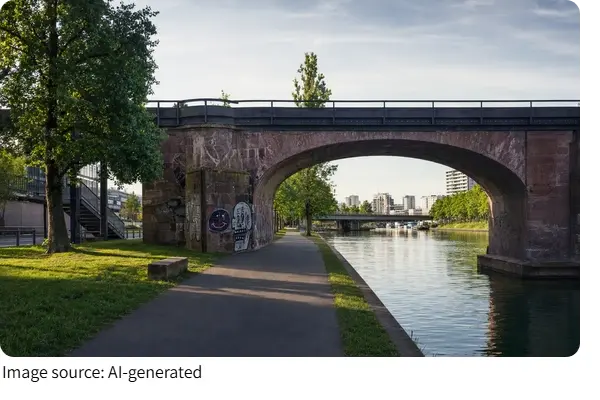
So next time you're in Saarbrücken, don't just cross the bridge to get somewhere. Stop in the middle, lean on the railing, and watch the water for a minute. You'll see the city the way locals do, unhurried and open. Worth the pause, every time.