A Walk Through Binondo

Celia
| 01-09-2026
 · Travel team
Beyond the traffic and modern skyline of Manila lies a neighborhood where centuries of history still unfold along crowded streets.
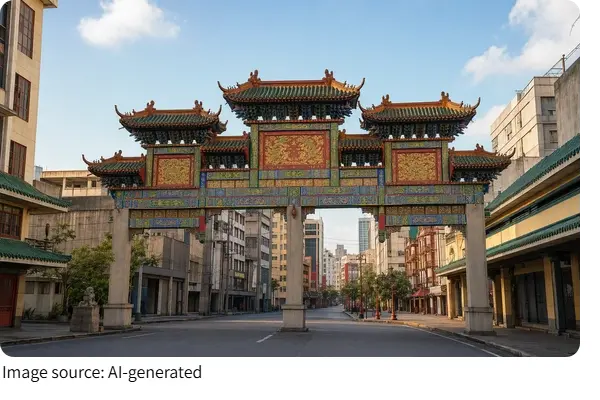
Marking the way into this fascinating district, the Binondo Chinatown Arch immediately catches the eye with its elaborate Chinese-inspired design.
Yet the real adventure begins after passing beneath it. Historic landmarks, family-run eateries, traditional shops, bustling markets, and old streets reveal the remarkable Filipino-Chinese heritage that has shaped Binondo since the late 16th century.
Rather than simply stopping for a photograph, travelers can use the arch as the starting point for an immersive journey through one of Manila's most characterful neighborhoods. From heritage landmarks and riverside walks to irresistible local specialties, Binondo rewards curious visitors at almost every turn.
Binondo
Getting to Binondo Chinatown Arch
One of the most photographed gateways to Binondo is the Filipino-Chinese Friendship Arch near the Binondo end of Jones Bridge. Travelers crossing the Pasig River from the Intramuros side can easily spot the colorful structure marking the entrance toward Chinatown.
Location: Near Jones Bridge, Binondo, Manila, Metro Manila, Philippines
Entrance fee: Free
The arch is an outdoor landmark, so visitors do not need to purchase an admission ticket. From Ninoy Aquino International Airport, the journey to Binondo generally takes around 30–60 minutes by car depending heavily on Manila traffic.
Taxi or ride-hailing from the airport: approximately ₱400–700
Jeepney or local public transportation: approximately ₱15–40 per ride
Tricycle for short local trips: approximately ₱30–100 depending on distance
Walking is often the easiest way to explore once you reach Binondo because many major attractions are located relatively close together.
Best Time to Visit
The most comfortable months for exploring Manila are generally from December to February, when conditions are typically less humid than during the hottest part of the year.
For photography, visit the Chinatown Arch in the morning when the streets are beginning to come alive, or around late afternoon when the sunlight becomes softer. Evening visits offer a different atmosphere as lights, restaurants, and busy streets create a lively urban scene.
Chinese New Year is one of the most exciting periods to visit Binondo, although visitors should expect large crowds.
Recommended visiting time: 8:00 AM–11:00 AM or 4:00 PM–7:00 PM
Suggested time for exploring Binondo: 3–5 hours
Explore Ongpin Street
After seeing the Chinatown Arch, continue toward Ongpin Street, one of the best-known streets in Binondo. The area is packed with traditional restaurants, bakeries, jewelry shops, herbal stores, souvenir stalls, and businesses that reflect the district's long Chinese-Filipino heritage.
Walking along Ongpin Street is free, making it an excellent activity for travelers on a limited budget. However, bringing cash is useful because smaller establishments may not always accept international cards.
Entrance fee: Free
Estimated food budget: ₱150–500 per person
Allow at least one or two hours if you plan to stop frequently for snacks and photographs.
Explore Plaza San Lorenzo Ruiz
Another important stop is Plaza San Lorenzo Ruiz, one of Binondo's best-known public spaces. Surrounded by historic architecture and busy streets, the plaza has long served as an important gathering point in the neighborhood.
Visitors can admire the surrounding architecture, take photographs, and pause here before continuing deeper into Binondo.
Location: Plaza San Lorenzo Ruiz, Binondo, Manila
Entrance fee: Free
The square provides a convenient place to rest while exploring the neighborhood. Its central position also makes it a useful starting point for reaching Ongpin Street and several other attractions on foot.
Discover Chinatown Museum
Travelers who want to understand Binondo beyond its food and streets can visit Chinatown Museum inside Lucky Chinatown.
The museum presents the history of Binondo through displays exploring migration, commerce, culture, community traditions, and the development of the Filipino-Chinese population.
Location: 4th Floor, North Wing, Lucky Chinatown, Reina Regente Street, Binondo
Opening hours: Tuesday–Sunday, 10:00 AM–6:00 PM
Regular admission: ₱150
Students: ₱100
Senior citizens/PWD: ₱120
Allow approximately one hour to explore the museum comfortably.
Walk Across Jones Bridge
Jones Bridge connects Binondo with the area leading toward Intramuros and offers attractive views across the Pasig River. Its neoclassical-style lamps and decorative elements have also made it a popular photography location.
Entrance fee: Free
Late afternoon and early evening are especially pleasant times to walk across the bridge. Visitors can combine Jones Bridge, the Chinatown Arch, Plaza San Lorenzo Ruiz, and Ongpin Street into one walking route without needing additional transportation.
Take a Side Trip to Fort Santiago
If you have additional time, continue across the river toward Intramuros and visit Fort Santiago, one of Manila's most significant historic sites.
The fortress has witnessed many important chapters in the city's past and is closely connected with Philippine national hero José Rizal. Visitors can explore its old stone walls, courtyards, gardens, gates, and exhibitions while learning more about Manila's history.
Entrance fee: ₱75 for regular visitors
Discounted admission: ₱50 for eligible visitors
Opening hours: Monday–Friday, 8:00 AM–10:00 PM; Saturday–Sunday, 6:00 AM–10:00 PM
Last-entry times are earlier than closing hours, so arriving well before evening is recommended.
Where to Eat
Food is one of the main reasons travelers visit Binondo. The district is particularly famous for dumplings, noodles, lumpia, hopia, fried dishes, and Chinese-Filipino comfort food.
Rather than choosing only one large meal, many visitors create their own food walk and try smaller portions at several establishments.
Street snacks: approximately ₱50–150
Casual restaurant meal: approximately ₱150–400 per person
Food-walk budget: approximately ₱500–1,000 per person
Popular areas for finding food include Ongpin Street, Yuchengco Street, Quintin Paredes Road, and the smaller streets surrounding Plaza San Lorenzo Ruiz.
As the streets grow busier and the aroma of freshly cooked dishes drifts from neighborhood kitchens, it becomes clear that Binondo is far more than another sightseeing stop in Manila. The Chinatown Arch may welcome travelers into the district, but the experiences beyond it leave the strongest impression.
Centuries-old heritage, enduring traditions, distinctive architecture, lively commerce, and beloved local flavors come together within a remarkably compact neighborhood. Spend a few hours wandering without rushing, taste something unfamiliar, admire the historic landmarks, and watch everyday life unfold around you.
By the time you cross back over Jones Bridge, you may discover that Binondo has offered something especially memorable: a vivid glimpse into the many cultures and stories that continue to define Manila.