Strawberry Jam Magic!

Camille Dubois
| 26-08-2026
 · Cate team
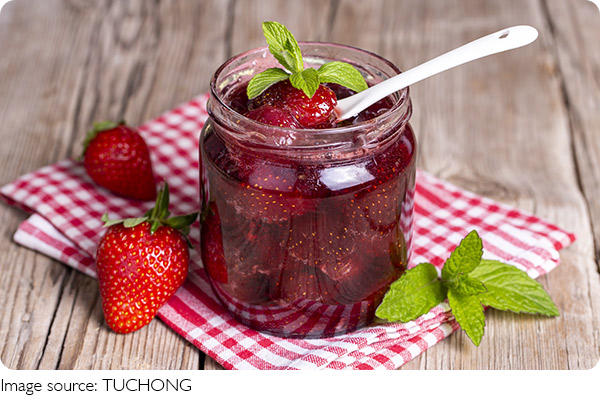
Homemade strawberry jam can be made without commercial pectin by cooking fresh berries long enough to reduce excess moisture and thicken naturally.
This recipe combines 2 pounds of strawberries with lemon juice, sugar, balsamic vinegar, and vanilla for a concentrated fruit spread. The finished jam can be refrigerated, frozen, or processed in jars for longer storage.
Ingredients
- 2 pounds (900 grams) strawberries, hulled and sliced
- 1/4 cup (56 grams) bottled lemon juice
- 2 cups (400 grams) granulated sugar
- 2–3 teaspoons balsamic vinegar
- 1 vanilla bean, split lengthwise, or 1 tablespoon vanilla extract
The preparation time is about 15 minutes, and cooking takes approximately 1 hour. The recipe makes about 3 cups of jam, although the final amount can vary according to how long the mixture cooks.
Why This Jam Does Not Need Pectin
Commercial pectin helps jams thicken quickly, but strawberries naturally contain pectin. This recipe relies on longer cooking to draw out the fruit's natural pectin while reducing excess liquid. The sugar also has an important role. It adds sweetness, helps draw liquid from the berries, and supports the preservation process. Lemon juice provides acidity, while balsamic vinegar and vanilla add additional flavor to the strawberry mixture.
Instructions
- Wash and hull the strawberries, removing the stems, then slice the berries.
- Place the strawberries in a large saucepan. Add the lemon juice, granulated sugar, balsamic vinegar, and vanilla bean or vanilla extract.
- Cook the mixture over medium-high heat, stirring frequently, until it reaches a gentle boil.
- Reduce the heat and continue cooking at a simmer. Stir occasionally and skim foam from the surface when it forms.
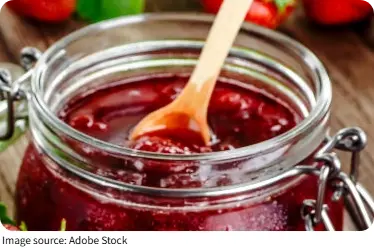
- Continue cooking for about 45–60 minutes. The jam should become thick enough to fall from a spoon in thick drips. Cooking time can vary depending on the strawberries and the temperature of the stovetop, so continue cooking if the mixture remains too loose.
- If a vanilla bean was used, remove the pod after cooking.
- Transfer the finished jam into the storage containers of your choice.
How to Check the Consistency
- A spoon test provides a quick way to check the texture. Spoon some jam from the saucepan and let it fall back into the pan. If it moves slowly and remains attached to the spoon in thick drips, the jam is ready.
- A chilled plate provides another test. Place a spoonful of jam on a cold plate and chill it for 1 minute. Run a finger through the jam; if it holds the path instead of immediately flowing back together, the consistency is suitable.
These tests are useful because this recipe does not contain commercial pectin, so the final texture depends on moisture reduction during cooking.
Storage and Canning
- For refrigerator storage, place the jam in an airtight container and keep it refrigerated for 1–2 months. For freezing, use a sturdy airtight container or heavy freezer bag and store the jam for up to 6 months. Once frozen jam is opened, keep it in the refrigerator.
- For shelf storage, fill sterilized jars while leaving 1/4 inch of headspace. Wipe the jar rims clean, then cover them with sterilized lids and rings. Process the jars in boiling water for 10 minutes, keeping the jars completely covered by water throughout processing. Let the jars cool to room temperature before removing the rings and storing them in a cool, dry place away from direct sunlight.
- For canning, bottled lemon juice is preferred because its acidity is consistent. Freshly squeezed lemon juice can be used when the jam will be refrigerated or frozen instead.
- Do not reduce the sugar or replace it with a sugar alternative when preparing the jam for long-term shelf storage. Adjustments can be made when the jam will be used quickly or kept refrigerated or frozen, but the stated recipe does not provide tested guidelines for those changes.
- The finished jam can be spread on bread, rolls, or biscuits, or used with crepes, waffles, and pancakes. It can also be added to yogurt or ice cream. Check stored jam before use and discard it if mold, fermentation, or bubbling appears.
Using fresh strawberries and allowing enough cooking time gives this pectin-free recipe its intended consistency. Check the jam with a spoon or chilled plate before transferring it to storage containers, then choose refrigerator, freezer, or properly processed jar storage based on when it will be used.