Rug Size Fix

Arvind Singh
| 28-07-2026
 · Lifestyle team
Hi, Readers! A room can have lovely seating, beautiful lighting, and all the little details you carefully picked, yet still feel a bit off.
So often, the reason is the rug. One of the most common decorating mistakes is choosing a carpet that is too small for the space.
It might seem like a minor detail at first, but it can make the whole room look disconnected, cramped, and unfinished. When the carpet does not properly anchor the furniture, everything around it starts to feel like it is floating.
A too-small rug tends to break up the room instead of pulling it together. In a living room, this usually happens when the rug sits only under the coffee table and misses the seating around it. That layout can make the furniture feel separated rather than part of one comfortable conversation area.
In a bedroom, a small rug can look lost under the bed, leaving the room feeling unbalanced. In dining areas, the problem becomes even more obvious when chairs slide off the rug the moment someone pulls them back. That makes the whole setup feel awkward, not cozy.
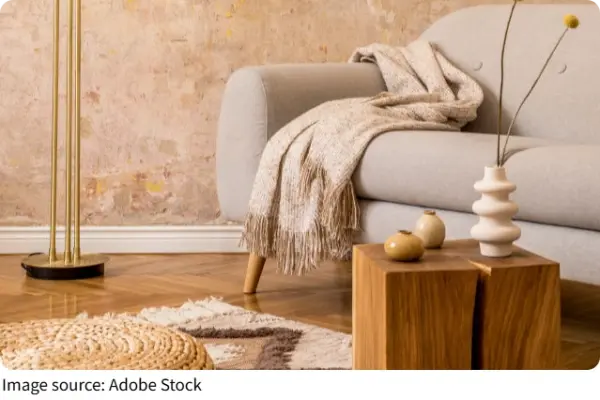
Why size changes everything
The right rug helps define the room and gives furniture a clear place to belong. In a living room, a larger carpet should usually be big enough so that at least the front legs of the sofa and chairs rest on it. In a bigger space, all the furniture legs may fit on the rug, and that often looks even more grounded.
In a bedroom, the rug should extend beyond the sides of the bed enough to feel soft underfoot when you step out. In a dining room, the rug should be large enough that the table and chairs stay on it, even when the chairs are pulled out for use.
These small shifts in measurement can completely change how comfortable and polished a room feels.
What goes wrong with a small rug
When a rug is undersized, the eye notices it right away, even if you cannot immediately explain why the room feels off. A small carpet can make the space seem smaller because it cuts the floor into separate sections instead of connecting them.
It can also throw off the scale of the furniture. A large sofa paired with a tiny carpet creates tension in the room, while a properly sized rug creates balance. This is why rug size is not just about covering the floor. It is about proportion, flow, and helping every other piece make sense together.
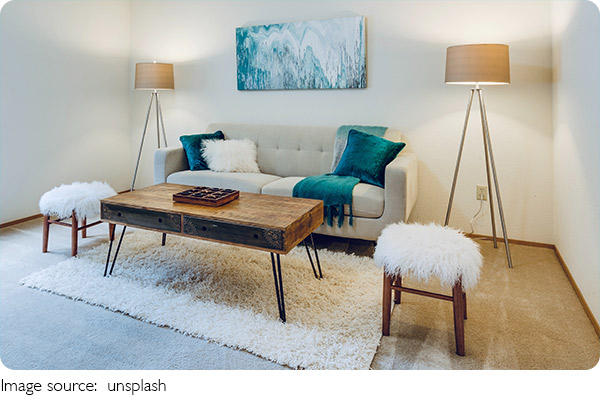
How to choose better
Before buying, measure the seating area, not just the empty floor. Think about where each furniture leg will land and how people move through the room. It also helps to mark the carpet size on the floor with painter's tape so you can see the footprint before making a decision.
If you are deciding between two sizes, going larger is often the safer choice. A generous rug usually makes the room feel more open and intentional, while a small one can read like an afterthought. Leaving a border of visible floor around the rug is still important, but the rug should feel connected to the furniture, not isolated in the middle.
Room by room guidance
For living rooms, common larger sizes often work better than people expect, especially in open layouts. For bedrooms, think beyond what fits under the bed and focus on what will feel comfortable around it. For dining areas, be sure to include the chair movement in your measurements, not just the table itself.
Hallways and entry spaces also need careful sizing so the floor covering feels purposeful instead of skimpy. In every case, the goal is the same: the carpet should support the room, not shrink away from it.
Getting the rug size right can quietly transform everything else around it. If your room has been feeling unfinished and you cannot quite put your finger on the reason, the rug may be the missing piece.
Take a fresh look at the scale, measure with care, and give your furniture the grounding it needs. Sometimes the simplest change is the one that finally makes the whole room click.