Lej da Staz, Switzerland

Mariana Silva
| 30-04-2026
 · Travel team
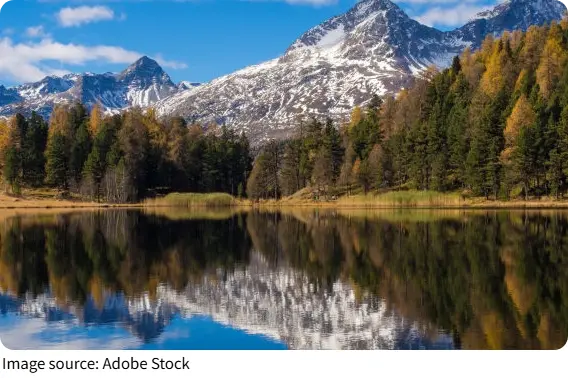
Snow dusting a rocky peak. Golden larch trees blazing on the slopes below. And the whole scene reflected in a lake so still it looks like a second sky has opened beneath the surface.
That's Lej da Staz in autumn — a small glacial lake tucked inside the Stazerwald forest between St. Moritz and Pontresina, sitting quietly at 1,809 meters above sea level while everyone rushes past it toward the famous town below.
Why Lej da Staz Is Special
Most visitors to St. Moritz never find this lake. The main lake in town gets all the attention — the famous one with the luxury hotels and the horse races on ice. But Lej da Staz is something else entirely. The water comes directly from the glaciers of the Bernina Alps, which keeps it crystal clear and genuinely cold.
The surrounding Stazerwald forest is dominated by larch trees, and in autumn, those larches turn the most vivid shade of amber and gold you've ever seen in the Alps. The combination of snowy peaks, golden forest, and mirror-calm water creates the kind of scene that makes photographers crouch at the water's edge for a full hour just waiting for the ripples to settle.
How to Get There
Getting to Lej da Staz is refreshingly straightforward. The easiest approach is by train — Switzerland's rail network is one of the best in Europe, and St. Moritz is served directly by the famous Bernina Express and Glacier Express routes from Zurich, Geneva, or Chur. A second-class Swiss rail ticket from Zurich to St. Moritz runs around $50 to $70 depending on the booking window.
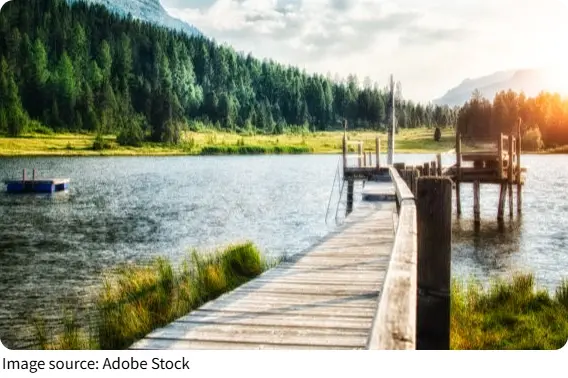
From St. Moritz station, the lake is a flat 30-minute walk through the forest — well-marked, easy, and beautiful the whole way. You can also reach it from Pontresina via a longer forest trail of about 60 minutes. No entrance fee, no ticket booth, no crowds — just a trail and a lake at the end of it.
Lake of Staz
Best Time to Visit
Autumn is the undisputed peak. The larch trees turn golden from mid-September through October, and the contrast against the snow that begins dusting the higher peaks makes the whole landscape look almost artificially perfect. Early mornings are worth the effort — on still autumn mornings, a layer of low mist sometimes drifts across the surface, and the reflection effect at that hour is extraordinary.
Summer is beautiful too, warm enough to swim in the glacier-fed water if you're brave enough. Winter turns the whole scene into a snowbound forest with the lake frozen solid beneath it — an entirely different kind of spectacular.
Where to Stay
Right on the lakeside stands Hotel Restorant Lej da Staz, a charming three-star property that's been there for over a century. Rooms are small and decorated in classic alpine style — cozy wooden furniture, mountain views, no television but no need for one. The restaurant serves local Engadin cuisine, and breakfast gets consistently excellent reviews from guests.
Rates start around $283 per night including taxes, and the hotel offers a free shuttle to St. Moritz town center, roughly ten minutes away. For those who want more options, the nearby village of Celerina offers guesthouses and smaller hotels at slightly lower rates, typically $150 to $220 per night, with easy access to both St. Moritz and the lake.
Lej da Staz is the rare kind of place that delivers exactly what the images promise — no disappointment, no crowds, no compromise. Thirty minutes of walking through pine forest, and you're standing at the edge of something genuinely unforgettable.