The Dragon Still Lives

Margot
| 27-04-2026
 · Travel team
Most people assume dragons are mythology.
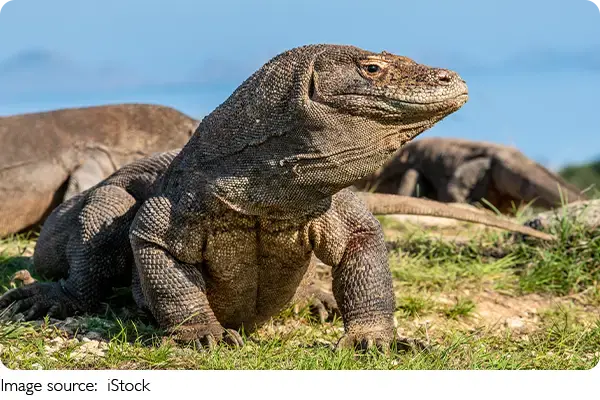
Then they land on Komodo Island and watch a 3-meter-long, 70-kilogram lizard drag itself across the dusty savannah with the slow, deliberate confidence of an animal that has had no natural predators for two million years.
The Komodo dragon is not a relic — it is a living apex predator, and approximately 2,500 of them roam freely across the islands of Komodo National Park in eastern Indonesia. Their forked yellow tongues flicker constantly, tasting the air for the scent of prey up to 9 kilometers away. Their saliva contains over 50 strains of bacteria, and recent research has confirmed they also produce venom that prevents blood clotting in their prey. A single bite, and the clock starts ticking.
What a Trek Actually Looks Like
Visiting the dragons is not a zoo experience — it is a guided wilderness trek through genuine wild terrain. Rangers carry long forked sticks, not for show but for actual protection, and they walk ahead of the group at all times. On Rinca Island, dragons are spotted almost immediately — they congregate near the park ranger station because kitchen smells drift their way, and they are patient, unhurried hunters.
The short trek covers roughly 2 kilometers through dry savannah dotted with lontar palms and takes about 45 minutes. The longer adventure trek pushes up into the hills for 2–3 hours, passing wild deer, water buffalo, and orange-footed scrubfowl before opening onto ridge views of the surrounding sea. On both routes, coming face-to-face with a dragon at close range is virtually guaranteed.
Beyond the Dragons
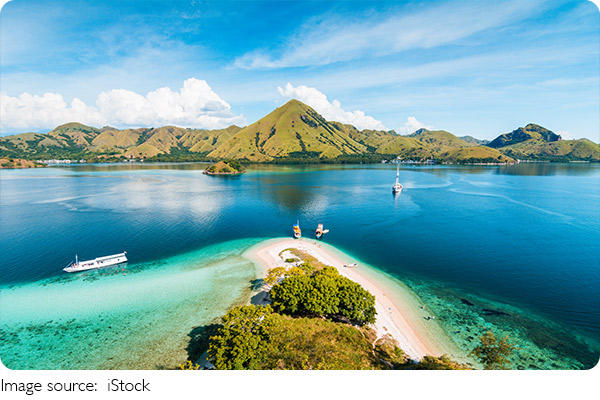
Komodo National Park's marine environment is equally extraordinary. The narrow channels between islands funnel powerful currents that create one of the most nutrient-rich underwater ecosystems on earth. Manta rays gather in cleaning stations off Manta Point year-round, circling slowly while smaller fish pick parasites from their bodies — a spectacle divers travel specifically to witness.
Pink Beach on Komodo Island's eastern shore is one of only a handful of naturally pink-sand beaches in the world, its distinctive color produced by fragments of red coral ground fine and mixed into white sand over thousands of years. The contrast between the blush shoreline and the turquoise water is genuinely surreal.
Komodo National Park
Practical Visitor Information
Getting There: Fly from Bali (Denpasar/DPS) to Labuan Bajo Airport (LBJ) on Flores Island — approximately 1 hour 20 minutes. All boats into the park depart from Labuan Bajo harbor.
Park Hours: Komodo Island is open daily from 6:00 AM to 6:00 PM. Rinca Island keeps the same hours.
Park Entrance Fee: Approximately $44 per person, covering entry to all major islands including Komodo, Rinca, and Padar, plus trekking and ranger fees. Fees are paid in cash (Indonesian Rupiah) at the harbor or park gate. Note that from 2026, the park enforces a hard daily visitor quota of 1,000 people — booking through a licensed operator in advance is essential.
Boat Tours from Labuan Bajo:
1. Shared day tour (4–6 island stops): $35–$60 per person.
2. Private speedboat day charter: $150–$300 per boat.
3. Multi-day liveaboard cruise (all-inclusive): $150–$300 per person per night.
Accommodation in Labuan Bajo:
1. Budget guesthouses: $15–$35 per night.
2. Mid-range hotels: $50–$100 per night.
3. Boutique hillside resorts with sea views: $120–$250 per night.
The Last Place Dragons Rule
Komodo National Park exists for one non-negotiable reason — to protect a creature that has survived ice ages, mass extinctions, and two million years of geological upheaval. Standing a few meters from a Komodo dragon in its natural habitat, watching it breathe and blink and taste the air, is one of those rare travel moments that resets your sense of scale entirely. Book early, arrive with cash, and prepare to feel appropriately small.