Oregon's Perfect Reflection

Leila
| 08-05-2026
 · Travel team
When a Volcano Meets Still Water
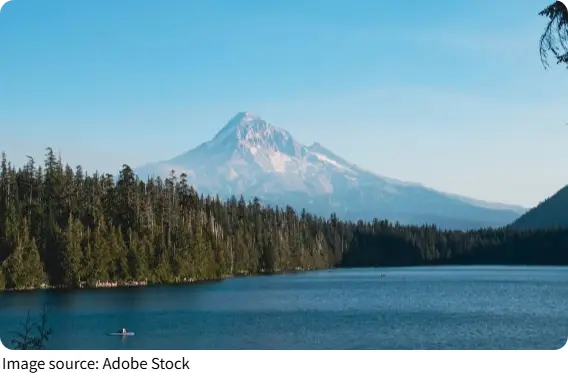
On a windless morning at Lost Lake, Oregon, something extraordinary happens.
Mount Hood — an 11,249-foot stratovolcano still classified as potentially active — appears twice: once towering above the treeline in brilliant white and grey, and once again in near-perfect symmetry on the surface of the lake below. The reflection is so precise, so undisturbed, that the image seems to exist in two dimensions simultaneously.
Lost Lake sits at 3,200 feet elevation on the northern face of Mount Hood, cradled inside the old-growth forests of the Mount Hood National Forest, and on calm summer mornings before the wind picks up, photographers line the shoreline well before sunrise to catch that mirror moment. It is one of the most quietly breathtaking natural compositions in the entire Pacific Northwest.
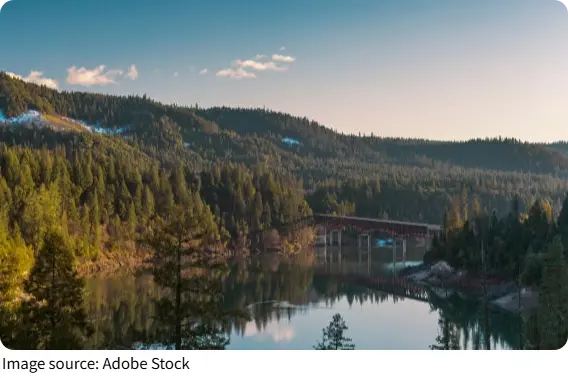
A Lake With Old-Growth Secrets
Lost Lake is the second-deepest lake in the entire Mount Hood National Forest, and its surroundings are ecologically extraordinary. The forested ridge to the lake's west divides the Hood River drainage from the Bull Run watershed — the source of Portland's drinking water — meaning the ancient forest here has been largely protected from logging for over a century.
Walking the old-growth boardwalk trail that winds through the trees beside the lake, you pass Douglas firs and Western red cedars several hundred years old, their canopies filtering the light into long green shafts above the trail. Pine martens, native bats, beavers, and river otters all live in this ecosystem, along with cavity-nesting birds found almost nowhere else in the region. The lake itself holds rainbow trout, steelhead, and salmon.
Mt Hood
What to Do at Lost Lake
The 3.2-mile Lost Lake Shoreline Trail loops the entire lake perimeter on flat, easy terrain, making it accessible for all fitness levels and genuinely rewarding at every bend. For those who want more elevation, the Huckleberry Mountain Trail branches off the shoreline loop and connects to the Pacific Crest Trail — a moderately demanding 7.5-mile round-trip that opens up sweeping views of Mount Hood and the Bull Run watershed from the ridge.
On the water, motorized craft are prohibited, keeping the lake surface peaceful and the wildlife undisturbed. Canoes, kayaks, paddleboards, and the resort's iconic red-and-white rowboats are available to rent at the dock — the rowboat view of Hood's reflection from the middle of the lake is something photographs cannot fully capture.
Practical Visitor Information
• Getting There: From Portland, take Highway 84 east approximately 58 miles to exit 62 in Hood River. Follow signs via Tucker Road and Dee Highway to Lost Lake Road — the drive takes approximately 90 minutes. Lost Lake Road dead-ends at the resort entrance. All roads are paved.
• Day Use Fee: $7 per vehicle, paid at the entrance gate.
• The resort is open May through October.
Accommodation at Lost Lake Resort:
1. Tent campsites: $43–$55 per night (reservable up to 6 months in advance via Recreation.gov).
2. RV sites with hookups: $55–$91 per night.
3. Cabins and yurts: $70–$120 per night depending on size and season.
4. Nearby Town Base — Hood River: For more comfort, Hood River town (45 minutes away) offers mid-range hotels from $120–$200 per night with easy access to both the lake and the Columbia River Gorge.
Worth the Drive Every Single Time
Lost Lake rewards those who arrive early and move slowly. The reflection of Mount Hood at first light, a rowboat drifting in silence across the glassy surface, the sound of a kingfisher calling from the old-growth shore — these are the moments that make a 90-minute drive from Portland feel like crossing into a completely different world. Pack a morning, bring layers, and let the mountain show you both of its faces.