Glenfinnan Viaduct

Sophie
| 27-04-2026
 · Travel team
A deep whistle echoes through the valley.
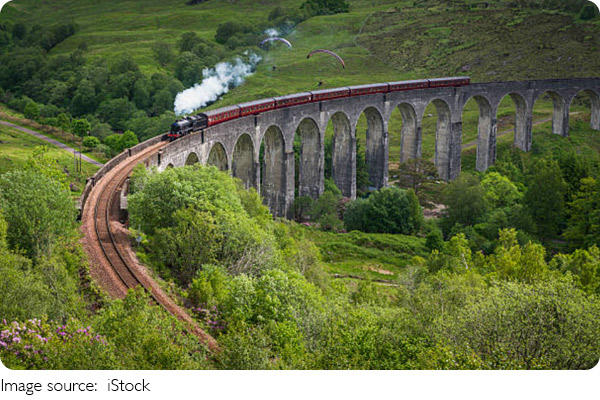
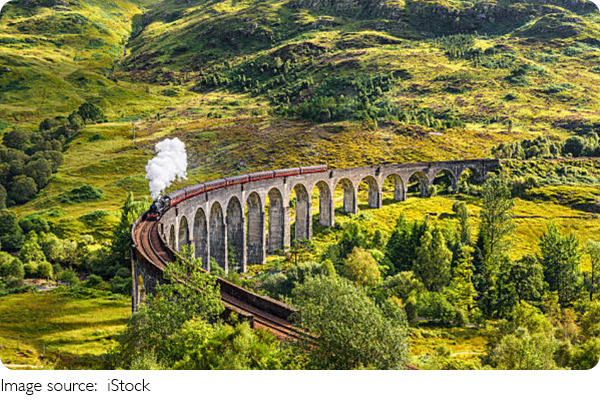
Then the steam appears — billowing white clouds rolling above the treeline — and suddenly a black locomotive emerges from the curve, pulling vintage crimson carriages across 21 stone arches above the River Finnan.
Every person on the hillside stops talking at exactly the same moment.
The Glenfinnan Viaduct, completed in 1901 entirely from mass concrete without a single steel beam, stretches 380 meters in a graceful curve above the Highland glen, with the green slopes of Lochaber rising on both sides.
Before Harry Potter made it a global icon, it was already one of the most celebrated feats of Victorian railway engineering in Britain. Today it is arguably the single most photographed railway structure in the world — and the steam train crossing it is very much real.
The Real Story Behind the Hogwarts Express
The Jacobite Steam Train has operated on the West Highland Line between Fort William and Mallaig since 1984, long before any film crew arrived. The locomotive itself is a working vintage steam engine — the same model used for exterior filming of the Hogwarts Express sequences in the Harry Potter series — hauling classic carriages along one of the most scenically dramatic railway routes in Europe.
The 41-mile journey from Fort William passes along the shores of Loch Eil, stops at Glenfinnan, continues through ancient oak woodland and across white sand beaches, and ends at Mallaig, a working fishing port with ferry connections to the Isle of Skye. The entire outbound journey takes approximately 2 hours and 10 minutes.
As the train crosses the Glenfinnan Viaduct, it slows — giving passengers roughly 30–45 seconds to take in the view of Loch Shiel stretching below.
Watch From the Hill — It's Even Better
Riding the train is magical. Watching it cross from the hillside viewpoint above the valley is something else entirely. The West Hill Viewpoint, reached by following the Viaduct Trail from the visitor centre car park and climbing the path beneath the arches, delivers the classic head-on shot of the locomotive emerging from the curve in a full crown of steam. Arrive at least 45 minutes before the scheduled crossing to secure a position.
The train crosses the viaduct approximately at 10:45–11:00 AM on the morning service and around 3:00–3:20 PM on the afternoon service — timings posted daily at the Glenfinnan Visitor Centre. Entry to the viewpoint is free.
Glenfinnan Viaduct
Practical Visitor Information
Getting There: Fort William is the departure point for the Jacobite, located approximately 2 hours by car from Glasgow via the A82. ScotRail also runs regular train services from Glasgow Queen Street to Fort William — a scenic 3.5-hour journey.
Jacobite Train Tickets:
1. Standard class round-trip: approximately $82–$95 per person (Fort William to Mallaig and back).
2. First class round-trip: approximately $120–$140 per person, includes complimentary light meal.
The train operates seasonally from mid-April through late October. Book well in advance — peak summer departures sell out months ahead with no walk-up availability.
Glenfinnan Visitor Centre: Free entry. The National Trust for Scotland manages the site, which also includes the Glenfinnan Monument, erected in 1815 to commemorate the 1745 Jacobite Rising.
Accommodation in Fort William:
1. Budget hostels and B&Bs: $50–$80 per night.
2. Mid-range hotels: $100–$160 per night.
3. Inverlochy Castle Hotel (luxury, 5-star): from $400 per night.
More Than a Movie Location
Glenfinnan existed long before the films arrived and will outlast them entirely. The viaduct was built by 1,000 workers in three years using a revolutionary concrete technique that engineers had never attempted at this scale. The valley below it witnessed one of Scottish history's most dramatic moments in 1745.
The steam train crossing it today is a genuine working heritage railway, not a tourist replica. Come for the Harry Potter connection if you must — but stay for the Highland landscape, the history, and the simple, irreplaceable spectacle of a steam locomotive crossing a century-old bridge in the rain-washed Scottish hills.