Patagonia's Granite Throne

Malcolm
| 30-04-2026
 · Travel team
Where the Earth Forgot to Stop
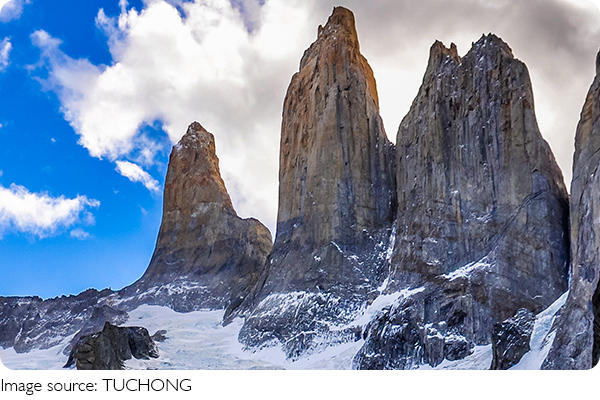
At the southern tip of South America, where the Andes finally begin to crumble into the sea, three granite towers rise from the Patagonian steppe in a formation so improbable it looks like deliberate architecture.
The Torres del Paine — Blue Towers in the Tehuelche language — stand between 2,500 and 2,850 meters, their vertical east faces carved by glaciers over millions of years into near-perfect columns of grey and rust-red rock.
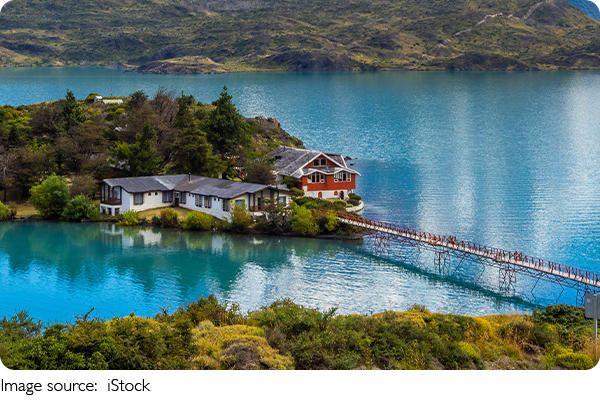
On clear mornings, they reflect in the turquoise surface of Laguna Torres below, framed by wildflowers and the vast, cloud-streaked Patagonian sky. This is Chilean Patagonia, one of the most geographically remote national parks in the world, and arriving here — after flights, bus rides, and a two-hour drive from the nearest town — makes the view feel genuinely earned.
Two Famous Treks, Completely Different Experiences
Torres del Paine National Park is built around two iconic multi-day routes. The W Trek covers approximately 70 kilometers in 4 to 6 days, connecting the park's three main highlights: the towers themselves, the Valle del Francés with its hanging glaciers, and the Grey Glacier floating in its namesake lake. It is the most accessible major trek in Patagonia, with refugios and campsites positioned at each overnight stop.
The O Circuit adds an additional 60 kilometers looping behind the Paine Massif — a remote, far wilder route taking 6 to 8 days that very few day-visitors ever experience. Both routes pass through landscapes that shift dramatically every few hours: golden pampas grassland, dense lenga beech forest, boulder fields, and ice-blue rivers fed directly by glacial melt.
Wildlife That Ignores You Completely
One of Torres del Paine's unexpected pleasures is its wildlife, which treats hikers as furniture. Guanacos — the wild relatives of llamas — graze on the hillsides in herds of 20 or 30, barely lifting their heads as you pass. Condors with 3-meter wingspans circle the thermals above the towers without effort.
Grey foxes trot along the trail edges at dusk. And in the lakes, black-necked swans glide across water so still it perfectly mirrors the peaks above. The park also harbors a small population of pumas — rarely seen but frequently tracked — and birdwatchers regularly spot Magellanic woodpeckers and flightless Darwin's rheas on the eastern steppe.
Torres del Paine
Practical Visitor Information
• Getting There: Fly into Santiago, then connect to Punta Arenas or Puerto Natales. From Puerto Natales — the gateway town 75 kilometers south of the park — regular buses reach the Laguna Amarga entrance in approximately 2 hours, costing around $15 per person. Renting a car from Puerto Natales offers more flexibility; note there is no fuel available inside the park.
• Park Entrance Fee: $35 per person for a 2-day pass, or $49 per person for a 5-day pass. Purchase in advance online at pasesparques.cl — cash is not accepted at entrances.
• Best Season: October through April. December to February is peak season with the longest daylight hours but the strongest winds.
• Accommodation:
1. Campsites inside the park (Vertice Patagonia network): from $10–$15 per person per night.
2. Refugio shared dormitories: $50–$100 per person per night, often including meals.
3. Luxury lodges (all-inclusive, minimum 3-night stay): $200–$500 per person per night.
Book accommodation 4 to 6 months in advance — peak season fills entirely within days of reservations opening.
A Place That Demands Full Commitment
Torres del Paine is not a destination you visit casually. It requires planning, layering, and a tolerance for weather that can deliver sunshine, sleet, and 100 km/h winds in the same afternoon. But no photograph has ever adequately captured what it feels like to stand at the base of those towers at sunrise, watching the first light turn grey granite to burning amber. That moment is available only in person — and it is worth every hour of travel to get there.