Heaven's Mountains Await
Finnegan Flynn
| 30-04-2026
 · Travel team
Nestled at the crossroads of Central Asia, Kyrgyzstan offers a landscape that remains one of the world’s most spectacular yet least explored wildernesses.
The Tian Shan range, aptly named the "Heavenly Mountains," serves as the rugged spine of a nation where ancient nomadic traditions harmonize with tectonic peaks reaching over 7,000 meters.
For the traveler seeking a sanctuary far from the industrial buzz of modernity, this region provides an immersive experience into a world defined by vast golden steppes, glacial rivers, and the enduring spirit of the Silk Road. This is the Tian Shan — the spine of Kyrgyzstan, one of the most spectacular and least visited mountain landscapes on the planet. More than thirty peaks here exceed 6,000 meters, and the country has 88 separate mountain ranges packed into a territory roughly the size of South Korea.
A Landscape That Still Belongs to Nomads
What makes this scene extraordinary isn't just the scale — it's the fact that it remains genuinely alive. Kyrgyz herders still practice seasonal migration across these plains, moving their livestock between lowland winter pastures and high alpine jailoos in summer exactly as their ancestors did for millennia. The dark specks dotting the golden steppe in a scene like this are likely yaks or horses, watched over by a herding family whose nearest neighbor might be 20 kilometers away.
The Tian Shan isn't a national park with manicured trails and entry kiosks — it's a working, breathing landscape where the boundary between human life and wilderness barely exists. Rock carvings dated to 2000 BC still cover boulders in remote gorges, left by people who saw these same mountains and felt the same urge to mark that they had been here.
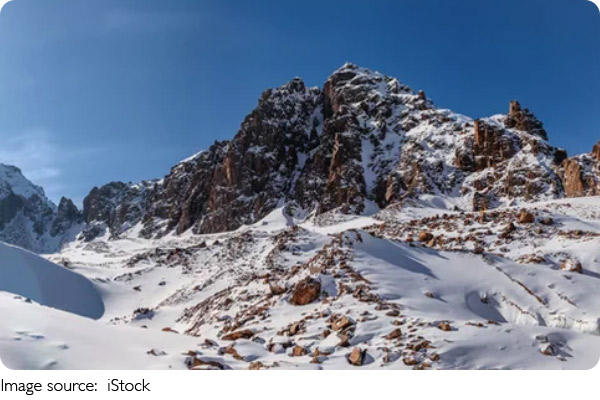
What to Do in the Tian Shan
The most popular base for exploring the mountains is Karakol, a compact city of 70,000 sitting at 1,900 meters on the eastern end of Lake Issyk-Kul — the world's second-largest alpine lake, which never freezes despite its elevation. From Karakol, multi-day treks push up into valleys like Altyn Arashan, where natural hot springs steam beside glacial rivers, or over the Ala Kul Pass at 4,000 meters with views of turquoise moraine lakes below. For those who prefer saddle to boots, horse treks to Song Kul Lake — a high plateau lake at 3,016 meters ringed entirely by summer yurt camps — rank among the most memorable experiences in all of Central Asia.
Tien Shan
Practical Visitor Information
- Getting There: Fly into Manas International Airport in Bishkek, the capital. From Bishkek, take a marshrutka (shared minibus) from the Western Bus Station to Karakol — approximately 5–6 hours, costing - around $5–8. Kyrgyzstan offers visa-free entry for citizens of over 60 countries.
- Best Time to Visit: July through September for trekking. The high mountain passes are snowfree and the steppe turns its most vivid gold in September.
- Accommodation: Staying in Traditional Yurt Camps offers the most authentic nomadic experience in high alpine pastures; these are typically bookable on arrival for $25–$45 per night. In the trekking hub of Karakol, cozy lodges like the Snow Leopard Hostel or Duet Hostel provide a great community atmosphere for $20–$40 per night. For those seeking urban comfort, Boutique Hotels in Bishkek offer modern amenities and traditional design for $60–$100 per night, making them the perfect place to recharge.
Overall daily travel costs including accommodation, meals, and local transport run $30–$90 — exceptional value for landscapes of this scale.
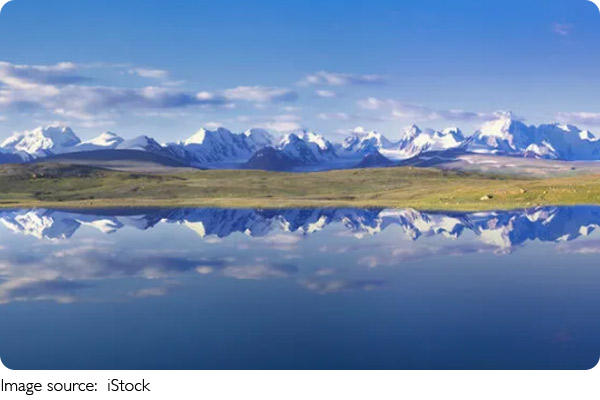
Kyrgyzstan remains a rare corner of the globe where the traveler can still find total solitude amidst a cinematic landscape. By sleeping in a yurt under a sky dense with stars and traversing passes that have remained unchanged for millennia, one gains more than just a photograph; they gain a profound reconnection with the earth. Whether you arrive for the challenge of the high-altitude trek or the quiet rhythm of nomadic life, the Tian Shan offers a meaningful pause—a chance to witness the world as it was, and as it should be.