Cooper Creek

Mei
| 09-05-2026
 · Travel team
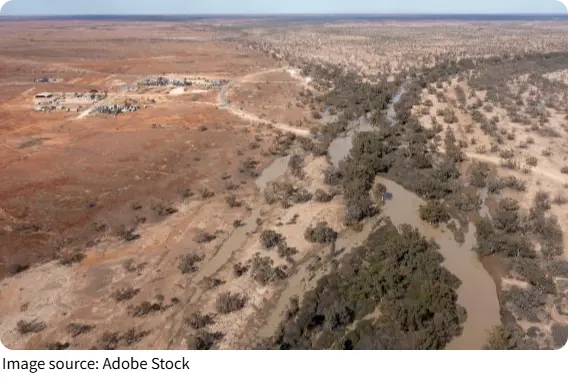
A river that barely exists for most of the year suddenly spreads itself across an ancient desert floodplain in a branching network of channels so precisely drawn they look deliberate.
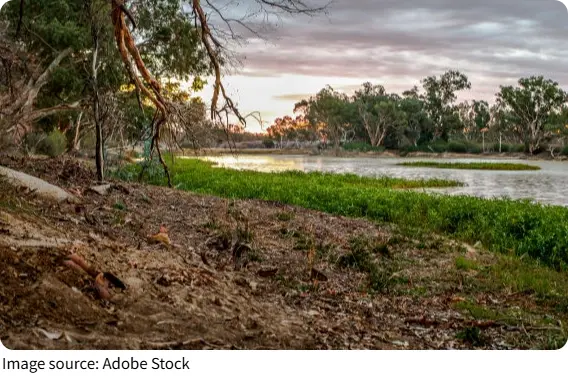
The water is pale blue against brown earth at the hour between sunset and dark, the sky above it shifting through lavender and pink toward deep purple at the horizon.
No roads are visible. No structures. Just water, sand, and a sky that does whatever it wants over a landscape too remote to be interrupted by human presence.
This is Cooper Creek in outback South Australia, and it is one of the most visually extraordinary river systems in the world precisely because it spends most of its time as dry sand.
Cooper Creek drains an enormous catchment of approximately 300,000 square kilometers across Queensland and South Australia, carrying water from tropical rainfall events in the north through the Channel Country to Lake Eyre, the largest lake in Australia, when conditions align.
The flooding events that fill the creek and spread across the surrounding floodplain occur irregularly, sometimes years apart, and when they do occur they transform one of Australia's driest landscapes into a waterway visible from satellite imagery across hundreds of kilometers.
Getting There
Cooper Creek flows through the Innamincka Regional Reserve in northeastern South Australia, with the town of Innamincka serving as the primary base for the region. Innamincka sits approximately 1,100 kilometers northeast of Adelaide and approximately 1,000 kilometers southwest of Brisbane.
From Adelaide, the drive to Innamincka via Lyndhurst and the Strzelecki Track takes approximately 13 to 15 hours on a combination of sealed and unsealed outback roads. A four-wheel drive vehicle with high clearance is essential, as significant sections of the route involve corrugated dirt roads that are impassable in wet conditions. Carrying a minimum of 20 liters of water per person and sufficient fuel for 600 kilometers between service points is a non-negotiable requirement.
Scenic flights over the Cooper Creek floodplain and delta system operate from Innamincka and from Broken Hill in New South Wales, providing the aerial perspective that reveals the full visual character of the river system. Charter flights from Broken Hill to the Cooper Creek area cost approximately $400 to $600 per person for a two to three hour scenic flight, bookable through outback aviation operators.
Key Experiences and Costs
Cooper Creek and the Innamincka region reward visitors who understand that the landscape is the experience, with no formal attraction infrastructure beyond the natural environment itself.
1. The Innamincka Common walking tracks follow the creek banks through coolibah woodland and open floodplain, passing the Burke and Wills dig tree, a historically significant coolibah marked during the ill-fated 1860 expedition. Freely accessible at all hours with no entry fee.
2. Innamincka Regional Reserve covers approximately 1.36 million hectares of floodplain, gibber plain, and sand dune country. Entry requires a South Australian National Parks pass costing approximately $12 per vehicle per day or $75 for an annual pass covering all South Australian parks.
3. Canoeing and kayaking on Cooper Creek during flood or post-flood periods, when the creek holds sufficient water, provides direct water-level access to the floodplain channel system. Canoe hire is not available locally, requiring visitors to bring their own equipment.
4. Aerial tours from Innamincka covering the creek channels, surrounding dune country, and the Dig Tree site cost approximately $150 to $250 per person for a one-hour flight, bookable through the Innamincka Trading Post which coordinates local tour services.
Cooper Creek
Where to Stay
Accommodation in Innamincka is extremely limited, reflecting the town's tiny permanent population of approximately 10 residents.
Innamincka Hotel is the only conventional accommodation in the town, offering basic pub-style rooms from approximately $80 to $120 per night. The hotel also operates the primary dining and provisioning service for the region, making it the essential logistical hub for all visitors.
Innamincka Regional Reserve campgrounds along the creek provide designated sites with basic facilities from approximately $12 to $20 per night per vehicle. Several remote bush camping areas throughout the reserve require self-sufficiency in water, food, and waste management and are freely accessible with a valid park pass.
Cooper Creek rewards visitors who plan for remoteness rather than being surprised by it. The logistics of fuel, water, vehicle preparation, and weather monitoring are not incidental to the experience. They are the experience.
Arriving at the creek after a two-day drive through the outback, finding the channels running with water under a purple desert sky, and having the entire floodplain to yourself for as far as the eye can reach, that combination is available nowhere else in Australia. It requires preparation, but the landscape it delivers is unlike anything a shorter journey could produce.