Napoleon Cake

Caleb Ryan
| 24-04-2026
 · Cate team
We are preparing a classic Napoleon layer cake, a dessert well known for its many thin pastry layers and smooth vanilla cream filling. It looks elegant and detailed, but the process is actually very clear and easy to follow when we go step by step.
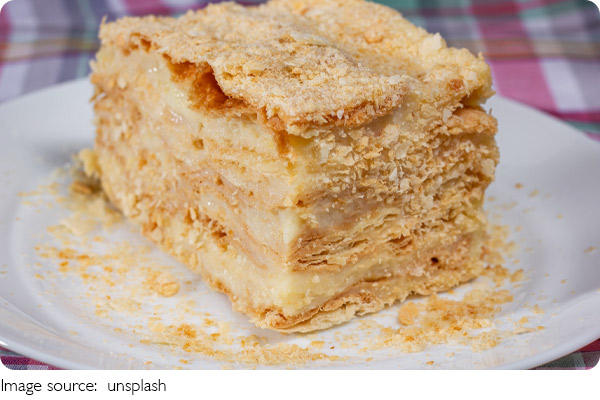
This cake is special because the crisp pastry layers soften after resting, slowly absorbing the cream and transforming into a rich, smooth texture. It is not a quick dessert, but it becomes truly rewarding once we complete it and let it set properly.
Ingredients We Need
Dough Ingredients:
- 3 cups all-purpose flour
- 339 g cold unsalted butter
- 1 egg
- 1/2 cup sour cream
- 2 tablespoons white vinegar
- 1 teaspoon vanilla extract
- 1/4 teaspoon salt
Vanilla Cream Filling:
- 2 cups milk
- 3 eggs
- 1/2 cup sugar
- 1/4 cup cornstarch
- 2 tablespoons unsalted butter
- 1 teaspoon vanilla extract
- 1/4 teaspoon salt
- 12 oz cold whipping cream
We prepare the cream first so it has enough time to cool before assembling the cake.
Step 1: Making the Vanilla Cream Base
We start with a smooth custard base.
1. In a saucepan, mix sugar, cornstarch, and salt.
2. In a separate bowl, whisk eggs and milk until fully combined.
3. Slowly pour the egg mixture into the saucepan. Stir well.
4. Place the pan over medium heat. Keep stirring constantly.
5. After 1–2 minutes, the mixture will begin to thicken.
6. When it becomes a smooth pudding-like cream, remove it from heat immediately.
7. Add butter and vanilla extract. Stir until fully melted and smooth.
8. Transfer to a bowl, cover, and refrigerate for at least 2 hours.
Once cooled, gently fold in whipped cream. This step makes the filling lighter and softer, giving the cake its airy texture.
Step 2: Preparing the Dough
Now we prepare the pastry layers.
1. In a large bowl, add flour and salt.
2. Cut cold butter into small pieces and add to the flour.
3. Rub butter into flour using fingertips until the mixture becomes crumbly.
4. In another bowl, mix egg, sour cream, vinegar, and vanilla.
5. Pour this mixture into the flour bowl.
6. Mix until a soft dough forms. Do not overmix.
7. Wrap the dough and let it rest for 20–30 minutes.
Resting helps the dough become easier to roll and keeps the layers tender.
Step 3: Rolling the Layers
This step creates the structure of the cake.
1. Divide the dough into 9–10 equal portions.
2. Take one piece at a time and roll it into a very thin circle, about 10 inches wide.
3. Lightly dust the surface with flour to prevent sticking.
4. Repeat until all pieces are rolled.
We aim for thin and even layers, as this will affect how the cake softens later.
Step 4: Baking the Pastry Sheets
1. Preheat the oven to 220°C (430°F).
2. Place each rolled dough circle onto a baking tray.
3. Bake each sheet for 6–8 minutes until lightly golden.
4. Remove and let them cool completely on a rack.
5. Set aside one baked layer for decoration crumbs.
Each layer should be crisp and slightly golden, not dark.
Step 5: Assembling the Cake
Now we build the cake step by step.
1. Place one baked pastry layer on a serving plate.
2. Spread a generous layer of vanilla cream evenly on top.
3. Add the next pastry layer and repeat the process.
4. Continue stacking until all layers are used.
5. Take the reserved baked layer and crush it into fine crumbs.
6. Cover the top and sides of the cake with cream.
7. Sprinkle the crumbs evenly over the entire surface.
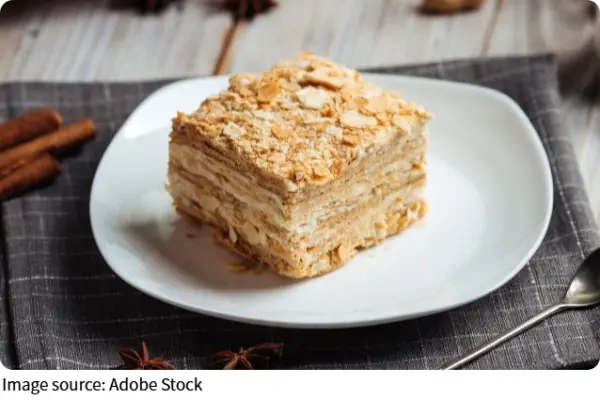
This crumb coating gives the cake its classic look and adds a light texture contrast.
Step 6: Resting and Final Texture
This step is very important.
1. Cover the assembled cake.
2. Refrigerate for at least 8 hours or overnight.
3. During this time, the cream slowly softens the pastry layers.
4. The cake becomes tender, creamy, and easy to slice.
When we cut into it the next day, we see perfect layers that hold together but melt smoothly in every bite.
A Sweet Reflection to Share
Lykkers, this Napoleon layer cake shows us how patience and simple steps can come together to create something truly special. Each stage is easy on its own, but when we combine them, the result becomes something memorable and rewarding.
We roll, bake, layer, and patiently wait, and in the end we enjoy a dessert that is soft, creamy, and beautifully balanced. If we appreciate baking that rewards care and attention, this is a recipe worth trying at home.
Let’s enjoy every step of the process, and share the finished cake with the people around us to make the moment even sweeter.