Wrangler Drive

Chandan Singh
| 21-04-2026
 · Automobile team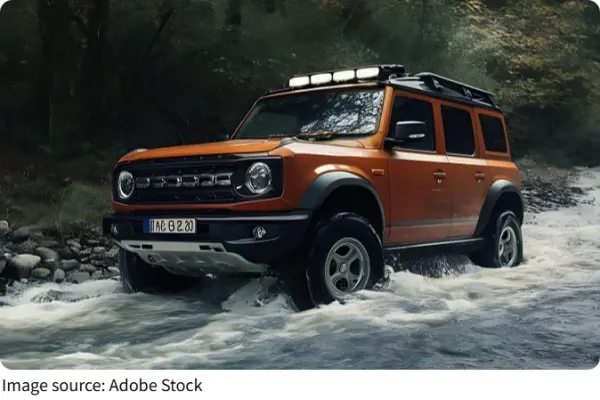
First Look, No Doubt
It doesn't try to blend in. The boxy shape, round headlights, and upright stance of the Jeep Wrangler make it instantly recognizable, even from a distance. While many modern vehicles lean toward smooth curves and urban styling, the Wrangler keeps a rugged, purpose-built design that feels rooted in function.
The doors can come off, the roof can be removed, and the windshield can fold down. This is not just a vehicle—it is an experience that starts the moment you step inside.
Built for More Than Roads
The Wrangler's core strength lies in its off-road capability. It is engineered to handle terrain that would stop most vehicles within seconds.
1. High ground clearance allows it to pass over rocks and uneven surfaces
2. Four-wheel-drive systems provide traction on loose or slippery terrain
3. Short overhangs improve approach and departure angles
4. Solid axles enhance durability and articulation
These features are not marketing points—they directly affect how the vehicle performs when conditions become challenging.
Driving Feel and Daily Use
On regular roads, the Wrangler feels different from standard SUVs. The steering is less isolated, and the ride can feel firmer, especially on rough pavement.
However, this is part of its character. You feel more connected to the surface, and every input has a direct response. While it may not match the smoothness of city-focused vehicles, it offers a sense of control and engagement that many drivers appreciate.
Fuel efficiency is moderate, typically ranging between 17–25 miles per gallon, depending on the engine and configuration.
Interior: Simple but Functional
Inside, the Wrangler balances durability with modern convenience. Materials are designed to handle dust, moisture, and frequent use. Controls are straightforward, with large buttons and easy-to-read displays.
Recent versions include:
• Touchscreen infotainment systems
• Smartphone connectivity
• Navigation and off-road data displays
The layout prioritizes usability over luxury, making it practical for both daily driving and outdoor trips.
Cost and Ownership
The Wrangler sits in the mid-to-high price range for SUVs, reflecting its specialized capability.
• Base models: around $32,000–$38,000
• Mid-level trims: $38,000–$50,000
• High-end versions: $50,000–$65,000+
Additional costs may include:
• Off-road accessories
• Larger tires or suspension upgrades
• Maintenance for heavy-use conditions
Despite this, resale value tends to remain strong, especially for well-maintained models.
Customization and Identity
One of the most unique aspects of the Wrangler is how customizable it is. Owners often modify their vehicles to match specific needs or personal style.
1. Roof types: soft top or hard top
2. Tire upgrades for different terrain
3. Lighting and exterior accessories
4. Interior storage solutions
This flexibility turns each Wrangler into something slightly different, reflecting how it is used and where it goes.

Final Reflection
The Jeep Wrangler is not designed to be the most comfortable or the most efficient vehicle on the road. Instead, it focuses on capability, adaptability, and a distinct driving experience.
It stands out because it stays true to its purpose. Whether navigating rough terrain or simply driving through the city with the roof removed, it offers something that few vehicles can match—a direct connection between driver, machine, and environment.