Uneven Hourglass Sand

Declan Kennedy
| 16-04-2026
 · Lifestyle team
Today we explore something we often see but rarely think deeply about: the sandglass. At first glance, it looks like a very simple tool for measuring time.
We just flip it, watch the sand fall, and wait. However, behind this calm and steady motion, there is a rich world of physics and subtle interactions.
A sandglass is made of two sealed glass chambers connected by a narrow passage. Inside, tiny particles move from the upper chamber to the lower one. This process may seem straightforward, but it involves gravity, motion, resistance, and many small factors working together.
What is a Sandglass?
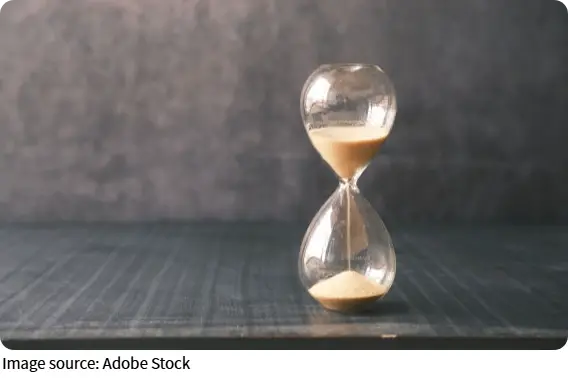
A sandglass is an ancient timing tool designed to measure time through the controlled flow of small particles. The structure includes two hollow chambers connected by a thin neck. One chamber holds fine particles, which slowly pass through the narrow opening into the other chamber when the device is flipped.
As the particles move downward, they form a cone-shaped pile in the lower chamber. This shape is not random; it forms naturally due to the interactions of falling particles, collisions, and settling under gravity. Even though the design is simple, the behavior inside is highly complex.
The Physics of Falling Particles
When we observe particles falling in a sandglass, we are seeing the effect of gravity. In a vacuum, objects fall with uniform acceleration due to gravity. This means their speed increases steadily over time.
However, inside a sandglass, the particles are not falling in empty space. Instead, they interact with air and with each other. Each particle follows a path influenced by gravity, but also by collisions and resistance from surrounding particles.
According to Newton’s second law, motion depends on force and mass. Gravity pulls the particles downward, but other forces constantly modify their movement. This makes the motion more complex than simple free fall.
Why the Flow is Not Constant
One common misunderstanding is that particles in a sandglass fall at a constant speed. In reality, the flow is not perfectly steady.
As particles move through the narrow neck, they experience resistance from air and from contact with other particles. These interactions slow them down or cause brief interruptions. Sometimes particles form small bridges or clusters at the opening before breaking apart again.
Air inside the chamber also plays a role. It pushes against falling particles, slightly changing their speed. Due to these combined effects, the flow is never perfectly uniform, even if it appears smooth to the eye.
What Changes the Flow Speed
Several factors influence how fast particles move inside a sandglass:
- Particle shape matters: Smooth, uniform particles flow more easily, whereas irregularly shaped ones create more friction and collisions.
- Particle size affects movement: If particle sizes vary, smaller particles may slip through gaps more quickly, while larger ones can block or slow the flow.
- Density plays a role: Heavier particles respond more strongly to gravity, but they also exert greater pressure on one another, which can affect stability.
- The shape of the sandglass itself is important: A wider or narrower neck changes how easily particles pass through, and even small design differences can significantly alter the timing.
Environmental Influence
The surrounding environment also affects how a sandglass behaves.
Temperature can slightly change air density inside the chamber. When air density changes, the resistance on falling particles also changes. Consequently, a sandglass performs most accurately under stable indoor conditions.
Humidity is another important factor. Moist air can cause particles to stick together, increasing friction and slowing the flow.
Why Precision Matters
Although sandglasses are simple tools, they are sensitive systems. Their accuracy depends on a balance of physical factors working together. If particle size, shape, or density is inconsistent, timing becomes less reliable.
This is why carefully designed sandglasses use uniform particles and precise openings. The goal is to create a stable and repeatable flow, even though perfect consistency is impossible in real conditions.
Understanding these details helps us appreciate how much science is hidden in such a simple object. It is not just sand falling through glass, but a continuous interaction between gravity, motion, and resistance.
A Quiet Lesson in Physics
In the end, a sandglass is more than a timer. It is a small demonstration of how the physical world works in real time. We see gravity pulling particles downward, resistance shaping their movement, and countless tiny interactions creating a visible flow.
For us, it becomes a reminder that even the simplest tools around us can contain deep scientific meaning. Next time we flip a sandglass, we can appreciate not just the passing time, but also the hidden physics that makes it possible.
Hourglass Weight
Video by kcPhysics