Schönbrunn Palace Park

Luca
| 21-04-2026
 · Travel team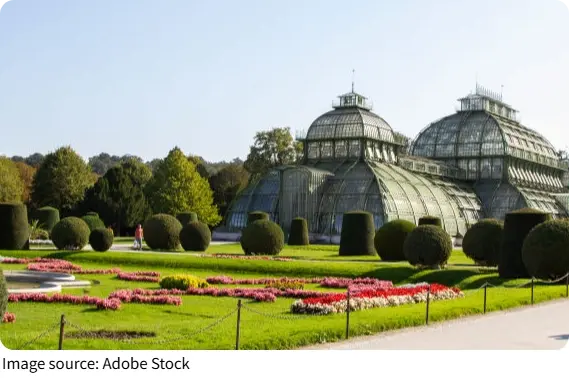
There is a particular quality of light that exists only inside a tree-lined walkway on a summer morning.
The kind where the canopy closes overhead into a green tunnel, sunlight filters through in shifting patches, and the path ahead disappears into a soft distance that makes you want to keep walking simply to see where it goes.
If you have seen photographs of the gardens at Schönbrunn Palace in Vienna and felt that pull, the reality delivers something the photograph cannot fully communicate: the scale, the silence beneath the leaves, and the feeling of moving through a space designed with extraordinary intentionality over three centuries.
Schönbrunn Palace and its gardens are among the most visited sites in Austria, but the gardens themselves carry a detail that surprises many visitors — entry to the main garden area is completely free. You can spend an entire morning walking the tree corridors, climbing to the Gloriette overlook, and exploring the formal parterres without spending a single dollar. Have you been, or is Vienna still waiting on your list? Either way, here is everything you need to plan the visit properly.
Schönbrunn Palace Park
What the Gardens Actually Contain
The Schönbrunn gardens cover approximately 1.2 kilometers from the palace facade to the Gloriette — the neoclassical stone arcade that crowns the hill at the garden's highest point. Between those two endpoints lies one of the finest examples of Baroque garden design in Europe, maintained with a precision that reflects three centuries of continuous upkeep.
The tree-lined walkways — allées, in the formal garden vocabulary — are formed from linden and horse chestnut trees that have been trained, pruned, and shaped over decades into the arched green corridors that define the garden's character. Walking beneath them in summer produces the layered light and deep shade that the image captures — a sensory experience quite different from an open garden, more enclosed, more contemplative, and considerably cooler on a warm day.
The garden also contains the Neptune Fountain — a large baroque water feature at the base of the hill — the Roman Ruin, a deliberately constructed artificial ruin that was fashionable in 18th-century garden design, and the Privy Garden, a more intimate enclosed space on the western side of the palace that requires a separate ticket to enter. The Schönbrunn Zoo, the oldest continuously operating zoo in the world, sits within the garden grounds and requires its own admission.
Getting There
Schönbrunn Palace is located in the Hietzing district of Vienna, easily accessible by public transport from the city center. The U4 metro line stops directly at Schönbrunn station, placing visitors at the garden entrance within a five-minute walk. The journey from Vienna's central Stephansplatz station takes approximately 15 minutes on the U4.
A single metro ticket in Vienna costs approximately $3. A 24-hour transit pass covering all metro, tram, and bus lines costs approximately $9 and is worth considering for visitors planning to use public transport across multiple destinations during the day. Vienna's transit system is reliable, frequent, and straightforward to navigate for first-time visitors.
Taxis and rideshare services from the city center to Schönbrunn cost approximately $10 to $15 depending on traffic and time of day.
Opening Hours and Entry Costs
The main palace gardens are open daily throughout the year from 6:30 a.m. until dusk, with no entry charge. This includes access to all the garden walkways, the Neptune Fountain, the Roman Ruin, and the hill paths leading to the Gloriette overlook.
The Gloriette café and viewing terrace at the top of the hill charges approximately $5–$6 for access to the roof terrace, which provides a panoramic view over the entire garden and the Vienna cityscape beyond. The café inside the Gloriette serves breakfast and lunch at standard Vienna café prices.
Palace interior tickets start from approximately $22 for the Grand Tour covering 40 state rooms, with combination tickets available that include the Gloriette terrace and other attractions from approximately $32. The Schönbrunn Zoo charges approximately $25 for entry and is a full half-day experience in itself.
Garden entry — free, open daily from 6:30 a.m.
Palace Grand Tour — from approximately $22 per person.
Gloriette roof terrace — approximately $5–$6 per person.
Schönbrunn Zoo — approximately $25 per person.
Where to Stay Nearby
Several excellent properties place visitors within easy walking distance of the palace while providing access to Vienna's broader attractions via the U4 metro line.
Hotel Schönbrunn sits directly adjacent to the palace grounds with views toward the gardens, offering comfortable rooms from approximately $150 per night. The property's location makes early morning garden access particularly convenient — arriving before the crowds gather is one of the most rewarding ways to experience the allées.
For visitors preferring to stay in Vienna's first district near the historic center, the Palais Hansen Kempinski offers five-star accommodation in a 19th-century building from approximately $350 per night, with Schönbrunn reachable in 20 minutes by metro. Budget-conscious travelers will find a wide range of well-reviewed guesthouses and smaller hotels throughout the 13th and 15th districts adjacent to Schönbrunn from approximately $70 to $120 per night.
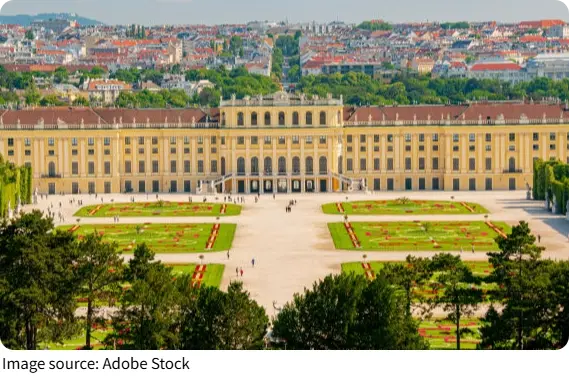
The gardens at Schönbrunn were designed to impress — to communicate the power and taste of the Habsburg court through the manipulation of space, symmetry, and living material. Three centuries later, they still do exactly that, though the audience has changed considerably. Walking those green corridors on a summer morning, with the light coming through the canopy in exactly the way the photograph suggested it would, is one of those travel experiences where the place and the expectation arrive at the same destination. Have you visited Schönbrunn, or is Vienna still on your horizon? Either way, the gardens are waiting — free, open, and precisely as beautiful as they look.