Innsbruck's Nordkette

Malcolm
| 15-04-2026
 · Travel team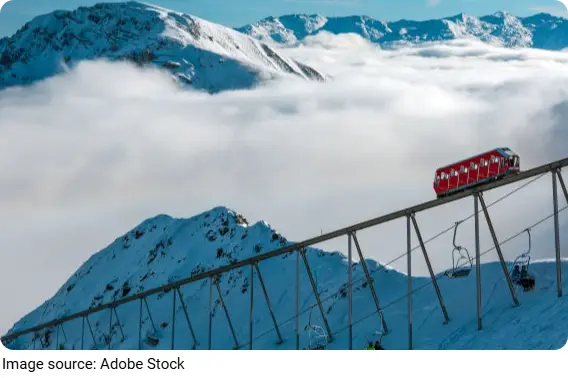
Most cities require you to leave before the mountains begin.
Innsbruck does not.
Step out of the medieval arcade of the old town, walk ten minutes north, and board a cable car that lifts you from street level at 574 meters to alpine terrain at 2,256 meters — a vertical gain of nearly 1,700 meters achieved in approximately 20 minutes, with the autumn-colored forest dropping away beneath the car and the city shrinking into a neat grid of rooftops as the elevation climbs.
It is one of the more remarkable urban-to-alpine transitions available anywhere in Europe, and the red cable cars that make it possible have become as much a symbol of Innsbruck as the Golden Roof that dominates the old town's main square.
Have you been to Innsbruck, or has Austria been sitting on your list long enough that it is time to plan the actual trip? Either way, here is everything you need to make the most of the Nordkette experience.
Nordkette
What the Nordkette System Actually Is
The Nordkette — which translates as the Northern Chain, referring to the mountain range that forms Innsbruck's dramatic northern backdrop — is served by a two-stage cable car system that begins at the Hungerburgbahn funicular station in the city and ascends in two sections to the Hafelekar summit station at 2,256 meters.
The lower section, from Hungerburg to Seegrube at 1,905 meters, travels through the autumn forest zone visible in the photograph — dense mixed woodland of spruce and larch that turns amber and gold in the weeks between mid-September and early November, creating the color palette that makes this particular cable car journey one of the most visually spectacular in the Alps during the autumn season.
The upper section continues above the treeline to Hafelekar, where the terrain transitions from forest to exposed alpine rock and the view expands to include the full Inn Valley, the city spread below, and the surrounding mountain ranges extending south toward the Italian border. On clear days, the panorama covers several hundred kilometers of alpine landscape.
The system was designed by the Iraqi-British architect Zaha Hadid, and the lower stations — particularly the Hungerburg and Congress stations — are among the most architecturally significant transit structures in Austria, their fluid white forms contrasting deliberately with the historic city below.
Getting There
Innsbruck is exceptionally well connected for a city of its size. Innsbruck Airport receives flights from numerous European cities, with journey times of approximately one hour from London, Munich, and Zurich. Budget carriers including easyJet operate seasonal routes that can bring ticket prices to $60 to $120 each way depending on booking timing.
From Munich, Innsbruck is reachable by train in approximately two hours, with tickets on the Railjet service starting from approximately $25 to $45 each way. From Vienna, the journey takes approximately four hours by direct train with tickets from approximately $30 to $60.
Within Innsbruck, the Nordkette cable car system begins at the Congress station in the city center, reached on foot from the old town in approximately 10 minutes or by tram on lines 1 and 3. The Innsbruck Card — a tourist pass covering public transport and entry to numerous attractions — includes unlimited Nordkette rides and is available for approximately $48 for 24 hours or $60 for 48 hours, representing excellent value for visitors planning to use multiple attractions.
Opening Hours and Ticket Costs
The Nordkette cable car operates daily throughout the year with seasonal schedule variations. During summer and autumn, the system typically runs from 8 a.m. to 5:30 p.m. with departures every 15 minutes from the lower stations.
Without the Innsbruck Card, individual ticket prices are as follows.
1. Hungerburg funicular from city center to Hungerburg — approximately $6 each way.
2. Hungerburg to Seegrube — approximately $18 each way.
3. Seegrube to Hafelekar — approximately $10 each way.
4. Full return journey from city center to Hafelekar summit — approximately $46 per person.
The Seegrube station at 1,905 meters is the most popular stopping point for visitors who want alpine views and accessible walking trails without committing to the full summit ascent. A restaurant at Seegrube serves Austrian mountain food with panoramic views and is open during cable car operating hours.
Where to Stay in Innsbruck
Innsbruck offers accommodation ranging from historic city center properties to modern hotels with direct mountain views.
Hotel Goldener Adler, operating in the old town since the 15th century and one of the oldest continuously operating hotels in Europe, offers rooms with direct views of the Golden Roof from approximately $180 to $250 per night. The location places guests within a 10-minute walk of the Nordkette cable car departure station.
Adlers Hotel sits on a hillside above the city with sweeping valley views and a rooftop infinity pool, with rooms from approximately $220 per night during peak autumn season. For travelers managing costs, the Innsbruck city center has a range of well-reviewed three-star properties and guesthouses from approximately $80 to $130 per night, most within comfortable walking distance of both the old town and the Nordkette access point.
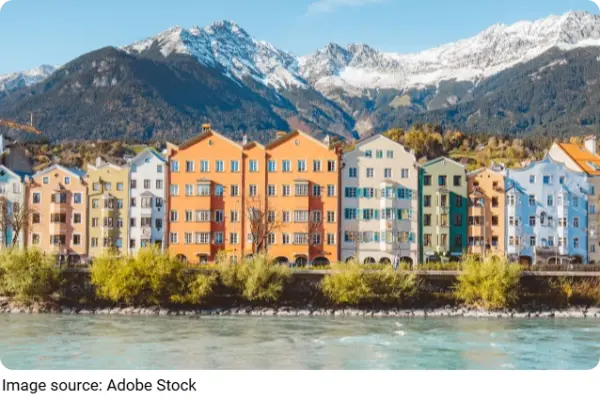
The Nordkette cable car offers something that very few urban experiences can claim — the genuine sensation of leaving a city completely behind without actually leaving it. The old town remains visible below as the car climbs through the autumn forest, shrinking but never disappearing, which produces a particular quality of perspective that is difficult to find anywhere else.
Have you ridden the Nordkette, or is Innsbruck still somewhere you have been meaning to reach? Either way, the red cars are ascending and descending every 15 minutes, and the view from Seegrube on a clear autumn morning is exactly as extraordinary as the photograph suggested it would be.