Abu Dhabi's Fossil Dunes
Malcolm
| 28-04-2026
 · Travel team
You expect the desert to be flat. You expect sand, heat, and horizon. But beyond the sweeping dunes and endless stretches of arid land, there's a hidden world of life, color, and unexpected beauty.
The desert isn’t just barren—it’s a place of striking contrasts, where resilience and wonder collide. Welcome to a landscape that defies expectations and invites you to explore its secrets.
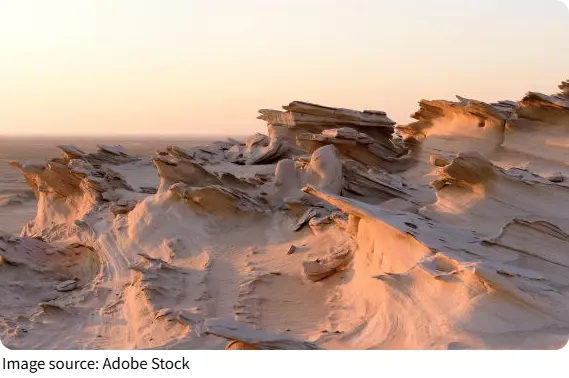
What you do not expect — cannot quite prepare for, even with photographs — is to round a curve in the track and find yourself standing beside a sandstone formation that curves and folds like a frozen wave, its layered surface reading like the pages of a book laid on its side, every line in the rock a record of wind direction from thousands of years ago. The Al Wathba Fossil Dunes are located approximately 45 kilometers southeast of Abu Dhabi city, representing one of the most visually extraordinary natural landscapes in the entire Arabian Peninsula. Almost nobody outside the UAE has heard of them. That is beginning to change.
Have you been to Abu Dhabi's desert beyond the city limits, or has it been sitting as an unexplored extension of a destination you assumed was primarily urban? Either way, here is everything you need to visit Al Wathba properly.
Fossil Dunes Abu Dhabi
What the Fossil Dunes Actually Are
The formations at Al Wathba are not conventional sand dunes in the active sense — they are ancient dunes that were once mobile sand fields, gradually cemented over thousands of years by calcium carbonate and other minerals carried through the sediment by groundwater. As the binding minerals hardened the sand into sandstone, the dunes became fixed in their existing shapes while the surrounding loose sand continued to erode away around them.
What remains are the preserved interiors of ancient dune formations — the layered cross-bedding that records the direction and intensity of the winds that built each dune visible in the curved strata lines running across every surface. These lines are not decorative. They are a geological archive of climate conditions from a period when this part of the Arabian Peninsula was considerably more dynamic in terms of wind and weather patterns than it is today.
The scale of the formations varies significantly across the site. Some rise only one or two meters from the desert floor, while others reach heights of four to five meters, with overhanging curves and deep recesses that create shadows and shelter within the formation. The color shifts from pale gold in direct sunlight to deep amber in the late afternoon, and the contrast between the warm sandstone and the deep blue of the desert sky — which the photograph captures precisely — intensifies in the final hour before sunset.
Getting There
Al Wathba Fossil Dunes are located approximately 45 kilometers southeast of Abu Dhabi city center, accessible via the Al Ain Road heading east and then south toward the Al Wathba area. The drive from central Abu Dhabi takes approximately 35 to 45 minutes depending on traffic conditions.
A private car or rental vehicle is the most practical way to reach the site. Car rental in Abu Dhabi starts from approximately $40 to $60 per day for a standard vehicle. A standard sedan is adequate for reaching the main access point, though a higher clearance vehicle provides more flexibility for exploring the surrounding tracks.
Taxis and rideshare services from Abu Dhabi city center cost approximately $25 to $40 each way to the Al Wathba area, making a round trip practical for visitors without their own transport. Arranging a return pickup in advance is advisable as signal quality in the desert can be variable.
Organized desert tours from Abu Dhabi that include the Fossil Dunes as a destination are available through several operators, typically priced between $60 and $120 per person depending on duration and whether additional desert experiences are included.
Visiting Practically
The Al Wathba Fossil Dunes site is open to visitors and entry is free. There are no formal ticketing structures, visitor centers, or staffed facilities at the site itself. The site is managed as a nature reserve and visitors are expected to stay on established tracks and avoid climbing on the formations where signage indicates restricted access:
Timing is the most important practical consideration. The desert in this part of the UAE reaches temperatures that make midday visits genuinely uncomfortable and potentially hazardous between late spring and early autumn. The ideal visiting windows are:
1. Early morning from sunrise until approximately 9 a.m. — the light is warm and directional, the temperature is manageable, and the formations cast long shadows that emphasize their three-dimensional character.
2. Late afternoon from approximately 4 p.m. until sunset — the same quality of light applies in reverse, and the golden hour before sunset produces the amber tones visible in the photograph.
3. The cooler months from October through March offer comfortable conditions throughout the day and represent the best season for extended exploration of the site.
Bringing sufficient water is essential — a minimum of two liters per person for any visit, with more recommended for longer stays or visits during warmer months.
Where to Stay in Abu Dhabi
Abu Dhabi's accommodation ranges from some of the most architecturally celebrated hotels in the world to reliable mid-range properties well positioned for day trips to the surrounding desert.
Emirates Palace Mandarin Oriental sits on its own beach on the western corniche with rooms beginning at approximately $500 per night — one of the most iconic properties in the Gulf region with architecture designed to reflect traditional Arabian palace design at an extraordinary scale.
For visitors prioritizing proximity to the desert excursion rather than beachfront position, Marriott Hotel Al Forsan in the Khalifa City area sits closer to the Al Ain Road corridor and offers comfortable four-star accommodation from approximately $120 to $160 per night. A range of business hotels in Abu Dhabi's central districts offer reliable accommodations, with prices ranging from approximately $80 to $130 per night and convenient access to the city's road network for early morning desert departures.
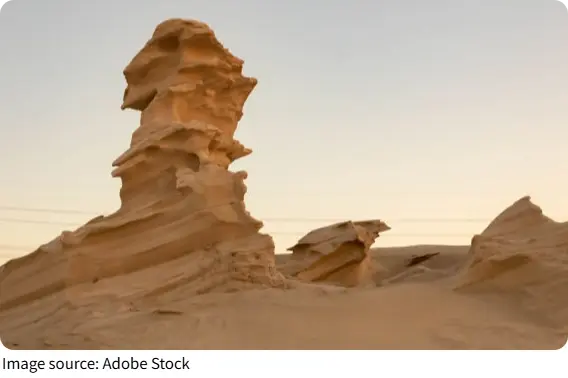
The Al Wathba Fossil Dunes exist at a particular intersection of geology and aesthetics that very few natural sites achieve — formations that are scientifically significant and visually extraordinary simultaneously, in a location that has not yet been processed into a fully managed tourist experience. That combination will not last indefinitely as Abu Dhabi continues developing its tourism infrastructure. Have you seen these formations, or is Abu Dhabi's desert still an unexplored extension of a city you thought you already knew? Either way, the sandstone is there — layered, curved, and reading the wind patterns of a thousand years ago in every line across its surface.