Tiny First Steps

Caleb Ryan
| 17-03-2026
 · Lifestyle team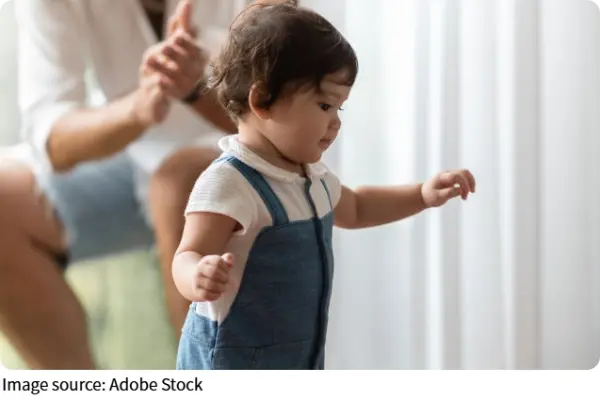
Do you remember your child’s first independent steps? We sure do. Our little one wobbled three steps, then plopped down laughing at themselves before we could even cheer.
We clapped and cheered—it felt more exciting than winning the lottery. That tiny step wasn’t just adorable—it marked the beginning of their journey to explore the world.
Watching children take their first steps reminds us that walking is a process, not a race. Many toddlers are still crawling at age two, and that’s completely normal. Each child develops at their own pace, so patience is key. Seeing another child walk first might make us anxious, but it doesn’t mean our child is behind.
Walking Follows Natural Development
Learning to walk is a gradual journey. Babies typically roll over around three months, sit up around six months, crawl around nine months, and walk independently around twelve months. This natural progression allows muscles, balance, and coordination to develop properly.
Sometimes parents, eager to see their child walk sooner, try different “training techniques” like holding them up or using walkers. Often, these efforts backfire and can even slow development. We’ve learned that letting nature take its course usually works best.
Does Earlier Walking Mean Smarter?
Not at all. Just like some children speak earlier while others take their time, walking develops at different rates. A baby walking at ten months isn’t necessarily smarter than one walking at eighteen months. According to the World Health Organization, walking between nine and eighteen months is normal.
Each child grows at their own pace—some focus on motor skills first, others on language. We’ve found that trying to compare milestones only adds unnecessary pressure. The real goal is supporting a child’s overall development, not racing to reach a specific date.
Do Babies Need Training to Walk?
The answer is no. Walking, like rolling over or crawling, happens naturally. When a child’s body is ready, they will walk. Our role as parents is to provide support without interfering—cheering without pressuring, guiding without controlling.
We encourage you to watch carefully, but resist the urge to constantly correct every wobble. Children learn through trial and error, discovering how to balance, shift weight, and coordinate steps. Interfering too much may slow this learning.
Why We Shouldn’t Carry Babies All the Time
Many parents carry babies constantly to avoid dirty floors or germs, or keep them in strollers so their feet never touch the ground. While well-intentioned, this delays walking. Just as a soldier can’t learn combat theory without practice, a baby can’t learn to walk without crawling first.
We’ve noticed that babies who get more floor time, crawl freely, and explore safely often walk earlier and more confidently. Allowing our little ones space to explore, get a little messy, and fall occasionally is essential. Clothes can be washed, minor bumps heal, but skipping crawling can affect walking development.

Common Walking Mistakes Parents Make
1. Holding Babies to Walk – Parents often hold hands to prevent falls. While it feels safe, it tires both the caregiver and the child, and delays independence. Babies don’t learn where it’s safe to step. Let them hold furniture or walls, and explore their environment safely on their own.
2. Using Walkers – Walkers seem helpful but can affect leg development, balance, and walking posture. The American Academy of Pediatrics advises against them. Walkers should only be used occasionally to prevent falls—not as a “training tool.”
3. Complete “Hands-Off” Approach – Some parents let babies walk completely unsupervised. Frequent falls can create fear. Babies need exploration and reassurance. By providing a safe environment and attentive support, we let them build confidence safely.
Practical Tips for Helping Babies Walk
- Provide a clean, safe space for crawling and walking.
- Encourage rather than force steps.
- Let babies use furniture or walls for balance.
- Don’t rush; trust their natural rhythm.
- Allow minor bumps and messy clothes—they’re part of learning.
- Celebrate small successes, like standing or taking a few steps independently.
- Stay close enough to catch a fall but far enough to allow self-discovery.
Final Thoughts
Parenting often tests our ability to let go of anxiety. Watching a child learn to walk can make us fret over every step, but every child has their own timeline. What our baby needs is not training, but trust and presence.
Let’s step back, watch, and cheer. Celebrate each wobbly step, laugh at every tumble, and enjoy this journey together. It’s not about speed—it’s about growing, exploring, and being there for each other. We’ll treasure these moments forever.