Why Children Love Splashing

Pardeep Singh
| 05-03-2026
 · Lifestyle team
A shallow puddle after the rain can turn an ordinary sidewalk into the most exciting place in the neighborhood.
An older passerby steps around it carefully. A child heads straight for it, eyes bright, feet ready. One confident stomp—and water arcs into the air like fireworks. Laughter follows immediately.
Why does this simple act feel so irresistible to children? The answer lies less in mischief and more in how young brains and bodies learn about the world.
Water as a Sensory Playground
1. Touch that changes instantly
Water is unpredictable. When a child steps into it, the temperature shifts, the surface breaks, and droplets splash onto skin. Unlike solid toys, water responds immediately to movement. Developmental research shows that young children rely heavily on sensory feedback to build neural connections. The coolness, the texture, and the shifting pressure on their feet provide rich input that stimulates tactile receptors.
2. Sight and sound in motion
A splash is not silent. It produces a sharp, satisfying sound. Ripples spread outward in expanding circles. Cause and effect become visible and audible at the same time. For toddlers and preschoolers, understanding cause and effect is a major cognitive milestone. Step harder—bigger splash. Step gently—smaller ripple. The lesson is immediate and repeatable.
3. Full-body coordination
Stomping in water is not random chaos. It requires balance, leg strength, and spatial awareness. The body adjusts to slippery surfaces, activating core muscles and refining motor control. Pediatric occupational therapists often use water play because it encourages coordination without the rigidity of structured exercise.
Curiosity in Action
1. Experimentation without instructions
Give a child a puddle and there are no rules to read. They test boundaries naturally. What happens if I jump with both feet? What if I drag my shoe slowly? This kind of open-ended experimentation supports problem-solving skills. It is informal science conducted at ground level.
2. Control over the environment
Young children have limited control over their daily routines—adults decide mealtimes, bedtimes, schedules. A puddle offers autonomy. One small foot can transform still water into motion. That sense of agency, even in a tiny scenario, builds confidence.
3. Emotional release
Physical movement regulates mood. Rhythmic actions like splashing can help discharge excitement or frustration. The combination of motion, laughter, and sensory input often leaves children calmer afterward. It is joy with a regulating effect.
Why Adults Hesitate
1. Practical concerns
Wet socks, muddy floors, extra laundry—these are real considerations. Adults focus on consequences because they manage logistics.
2. Safety awareness
Slippery surfaces can pose risks. Supervising water play ensures children explore safely, especially near deeper bodies of water.
3. Social norms
Some adults worry about appearance or disruption in public spaces. Children, however, are less constrained by these expectations, allowing them to experience the moment more fully.
Finding Balance
1. Choose safe settings
Shallow puddles away from traffic provide safer opportunities for spontaneous play.
2. Dress for the moment
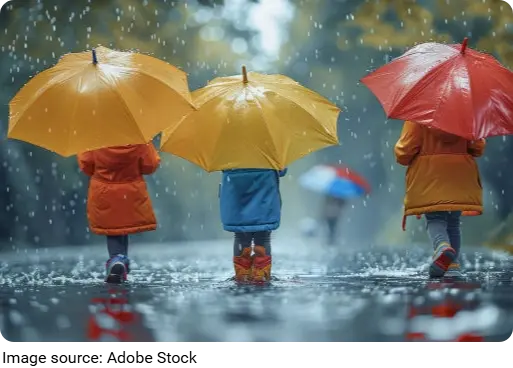
Waterproof boots and spare clothes reduce stress for caregivers while preserving freedom for children.
3. Join in occasionally
When adults participate—perhaps with one deliberate splash—it signals that curiosity and joy are welcome.
Children are not drawn to water simply because it is wet. They are drawn to what it offers: immediate feedback, sensory richness, and the thrill of visible impact. In a world that often asks them to sit still and stay clean, a puddle invites movement and discovery.
The next time a small pair of shoes heads straight toward a reflective patch on the sidewalk, pause before saying no. Beneath that splash is a lesson in physics, coordination, and confidence. Sometimes the shortest path to learning runs right through the water.