City Form

Anika
| 09-01-2026
 · Travel team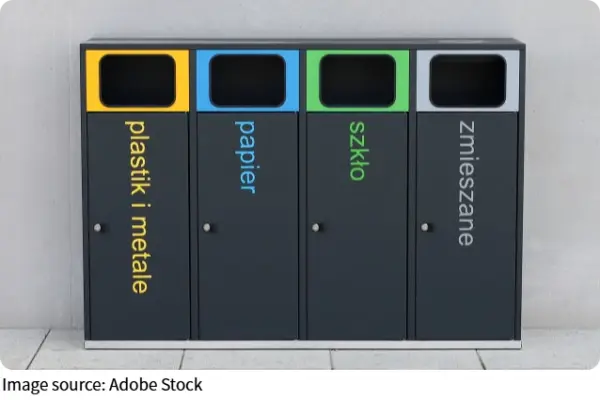
When we walk through the city every day, we often overlook the small details that quietly shape our experience — the benches we rest on, the lights that guide our way, and yes, the trash cans that stand on every corner.
These everyday objects are more than functional tools; they’re part of the city’s visual language. In recent years, designers around the world have started turning these public facilities into works of art that blend creativity, sustainability, and emotion.
So Lykkers, let’s take a closer look at how design is transforming even the most ordinary parts of city life into expressions of beauty and care.
Turning Trash Cans into Street Art
Once purely utilitarian, trash cans are now becoming aesthetic symbols of the modern city. We’ve seen designs inspired by nature — bins shaped like leaves or waves that seem to merge with their surroundings. Others take cues from architecture: minimalist concrete forms that echo the geometry of nearby buildings or bright, curved steel that adds a pop of color to gray pavements.
Some cities even experiment with interactive bins — those that light up when we throw something in or display short messages encouraging recycling. It’s more than fun; it’s a way to make people feel engaged. When a trash bin becomes beautiful or even playful, it changes how we treat our environment. Suddenly, keeping the city clean feels like participating in a shared art project.
The Beauty of Hidden Design
Modern cities are also embracing a subtle approach — creating “invisible” public facilities that blend seamlessly with their surroundings. Hidden bins beneath benches, recycling units built into street planters, and charging stations disguised as sculptures all reflect a shift in urban thinking.
The idea is simple: design should serve without interrupting. These invisible elements allow public spaces to look open and harmonious while still being practical. When a visitor can’t easily tell where a trash bin ends and a bench begins, it means the designer has achieved perfect visual balance.
Material Innovation Meets Sustainability
The materials used for public facilities have also evolved dramatically. Traditional metal and concrete are now being replaced or complemented by bamboo composites, recycled plastics, and corrosion-resistant ceramics. These eco-friendly materials are not just functional — they communicate a message.
For instance, a recycling bin made of transparent glass reminds us of what we throw away. A bench built from reclaimed wood tells a story of renewal. These materials connect us emotionally to our environment, making sustainability feel tangible. In a way, the choice of material becomes a silent conversation between design and behavior.
Design as Cultural Expression
In many cities, public facilities also serve as a canvas for local identity. A coastal town might have seashell-inspired bins and wavy benches that reflect its relationship with the ocean. A university district could feature geometric steel furniture symbolizing creativity and intellect.
One of the most striking examples can be found near art museums, where trash bins and street lamps are designed as installations — functional yet thought-provoking. They remind us that art doesn’t only belong inside galleries; it belongs where people live, walk, and breathe. This integration of design and daily life turns the city itself into an open-air museum.
When Design Shapes Behavior
Good design does more than please the eye — it changes how we act. Studies have shown that people are more likely to use public facilities properly when those facilities look clean, modern, and well-designed. A thoughtfully placed bin or a comfortably shaped bench can influence how long people linger in a space or how carefully they dispose of waste.
This is the quiet power of design: it guides behavior without enforcing rules. It makes responsibility feel natural. When the city treats us with beauty, we respond with respect.
Let’s Keep the City Beautiful!
Next time we step into a park, a plaza, or even a bus stop, let’s take a moment to notice the small design touches that shape our surroundings. The curve of a bench, the gentle glow of a lamp post, or the clean lines of a thoughtfully placed bin — they all tell stories about how much care goes into our shared spaces.
So, Lykkers, let’s appreciate the creativity that often hides in everyday corners. The best urban design doesn’t just make our cities more functional — it makes them feel alive, welcoming, and deeply human. When beauty meets purpose, every street becomes a work of art waiting to be discovered.
Modern Trash can design ideas / Trash receptacle design ideas / Trash bin design ideas
Video by 5-Minute Projects and Design Ideas